
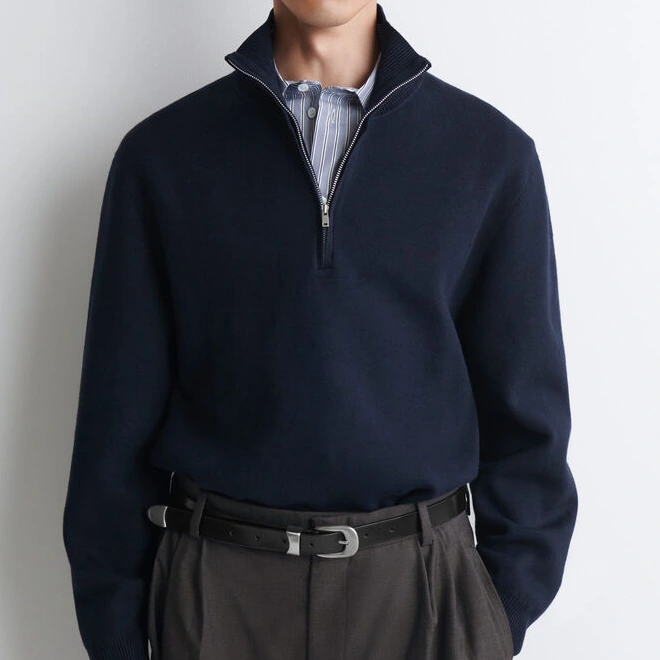
Choosing a neckline name is a starting point. Crew-neck openings and trim proportions can vary, while high necks also need decisions about folding and contact with the neck. Include layering, coverage and the intended profile in the reference brief. These six neckline routes turn a style preference into requirements that can be measured and fitted.
Crew neck: opening and trim
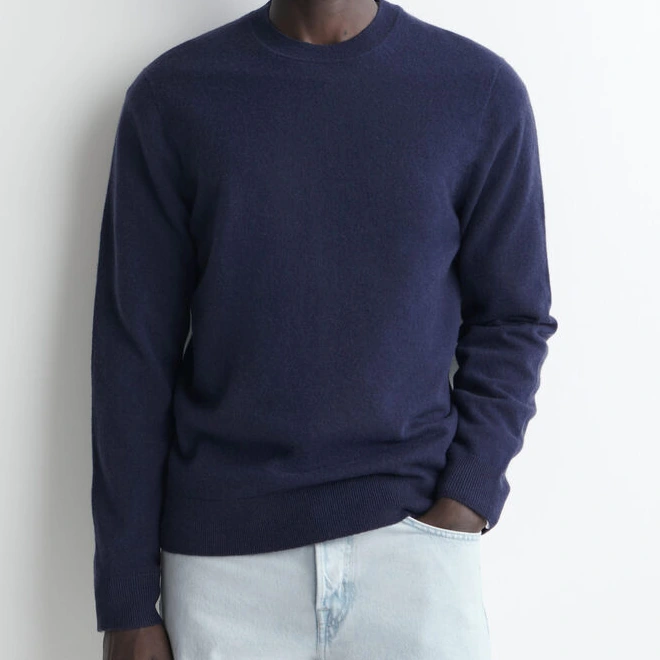
A crew neck forms a continuous curved opening, which can sit close or open more widely. This plain crew-neck jumper makes the rounded opening and ribbed trim easy to see. Compare the width of the opening with the trim, then specify front and back drops and test with the intended underlayer.
- What to check in the sample
- Check head passage, back-neck fit and waviness.
A useful way to brief the factoryKeep the crew neck clean; use the measured reference for width and front drop.
USE THIS IN A STYLE BRIEFCompare openings over the same intended underlayer and record preferred width and front drop separately. This helps preserve an approved body silhouette while refining the neck.
V-neck: depth and point
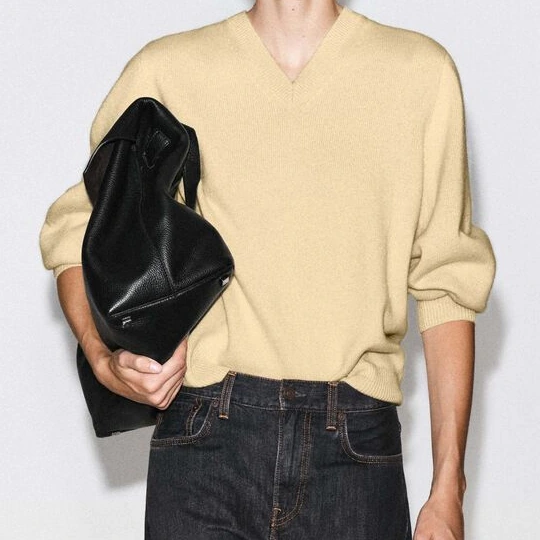
The sloping sides and central point define a V-neck. This pale jumper makes the opening and point easy to read. Shallow and deeper versions create different layering and coverage needs. Review the point, symmetry and coverage when leaning forward rather than measuring the drop alone.
- What to check in the sample
- Define the measuring point and check the V-point and both trims during wear.
A useful way to brief the factoryKeep the layered V-neck effect; confirm the drop with the specified underlayer.
USE THIS IN A STYLE BRIEFMark the V point on the style drawing and state whether it is worn alone or layered. Check coverage when leaning and moving as well as in a standing pose.
High and roll necks: specify the fold
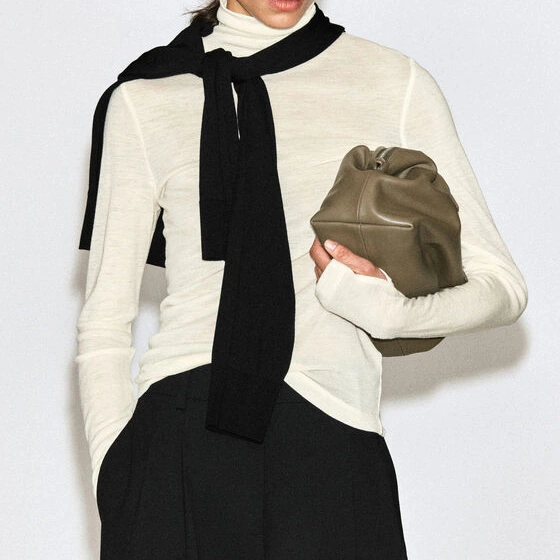
A tall knitted collar may stand upright or fold over; these are different briefs. The pale example shows an upright neckline. For a folded roll neck, specify the unfolded height, worn height and fold position. Also consider how the collar behaves when the wearer turns their head.
- What to check in the sample
- Assess neck circumference, recovery, head passage and side-profile support.
A useful way to brief the factoryWe want an upright collar without a fold; confirm height and circumference together.
USE THIS IN A STYLE BRIEFSpecify unfolded and folded heights and include a side reference. Assess neck-contact comfort with the proposed yarn and an actual garment sample.
Mock and funnel necks: shape the opening
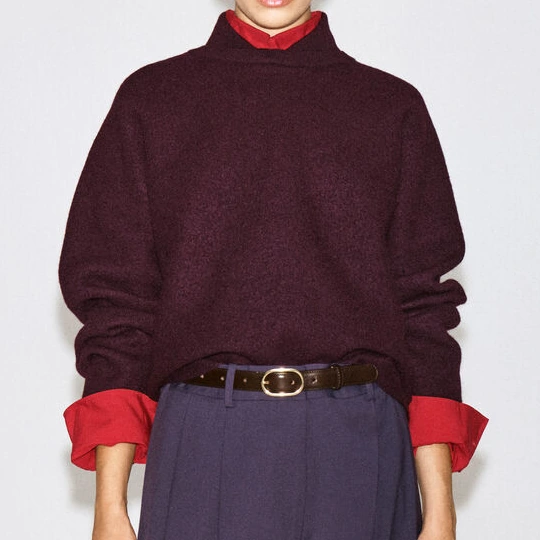
Mock and funnel neck labels vary between brands. Make height, top circumference and side profile explicit. The low upright collar on this dark pullover provides a proportion reference. Identify the red layer separately when preparing the brief, and check how the knitted collar sits when the wearer turns their head.
- What to check in the sample
- Check the collar at rest, during head movement and with top buttons open.
A useful way to brief the factoryUse a lower upright neckline with a comfortable top opening.
USE THIS IN A STYLE BRIEFNames vary between brands, so add dimensions and a side profile. For an upright neck, describe the intended opening and closeness to the wearer.
Polo-style collars: control the fold
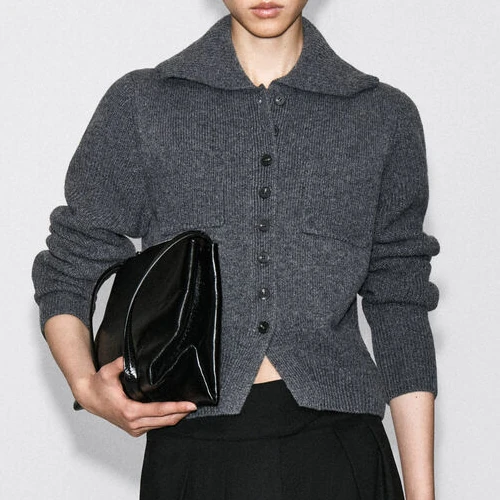
A folded collar creates a clear upper-body focal point. This collared cardigan is a reference for collar proportions rather than a pullover polo. Set the point length, collar width and relationship to the opening. Inspect how it settles on the body as well as how it looks laid flat.
- What to check in the sample
- Review collar points, fold line, opening length and curling after care.
A useful way to brief the factoryRetain the collar proportions; agree points and opening from front and side references.
USE THIS IN A STYLE BRIEFMark collar-point direction and the opening when folded, and review front and back. Include the outer garment when the piece is intended for layering.
Half zip: design both states
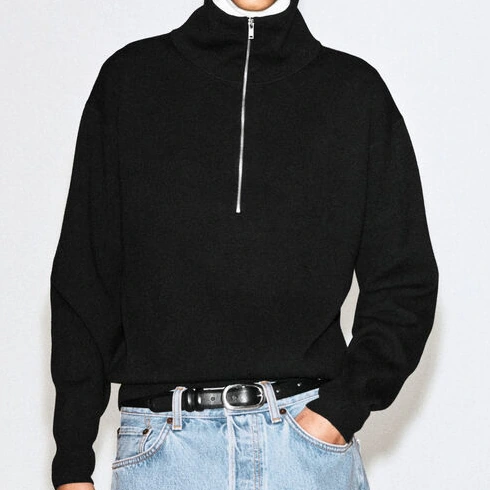
A half zip has two intended appearances: upright when closed and opened down. The centre zip on this black style helps locate the opening. Agree its length and hardware, then address skin contact at the top and the inside finish. Try opening and closing the zip while the sample is worn.
- What to check in the sample
- Check top-edge comfort, collar symmetry, zip flatness and repeated operation.
A useful way to brief the factoryUse a chest-length half zip with a natural collar shape in both states.
USE THIS IN A STYLE BRIEFShow the intended zipped and open appearances, specifying zip length and inside contact points. Include both wearing states in the sample review.
Turn the reference into a clear brief.
| Direction | Specify | Wear check |
|---|---|---|
| Crew | Width, front/back drop, trim | Back neck, access, layering |
| V-neck | Drop, slope, point finish | Coverage, symmetry, flatness |
| High/mock | Height, circumference, fold | Comfort, support, recovery |
| Collared/zip | Points, opening, hardware | Open and closed appearance |
Four steps for sample review
- Collect front and side references and identify separate underlayers.
- Define measuring points for width, drop and collar height.
- Review the same sample at rest, in movement, open and closed.
- Recheck the neckline after the intended care process.
Common questions
Does one crew neck suit everyone?
The name is insufficient: width, drop, body proportions and layering change the result.
Why do high necks look so different?
Height, circumference, stitch support and folding determine the shape together.
Can I change the neckline while keeping the body?
State that goal and provide both the original style and the desired neckline. Assess any effect on the shoulder, opening and overall proportions with the design and sample.
Agree the neckline through measurements and wear
A neckline brief needs design proportion, access, coverage and comfort. Recording them separately makes revisions easier to discuss.
- Gather front and side references and identify layering, opening or folding states and essential proportions.
- Record applicable neck width, front/back drops and collar height on the drawing or specification, using agreed measuring points.
- Use the target-size garment to assess access, neck contact and coverage in movement, then identify individual revisions.
Bring the neckline and its intended styling
Share front/side references, intended underlayers and any existing dimensions. Explain which proportions must stay and which can change so the sample review has clear priorities.
Discuss a neckline brief ↗Technical references
Confirm construction and performance with agreed samples and appropriate testing. The following references provide further reading.
- Craft Yarn Council · Body Measurements & Fit
- Woolmark · Introduction to Knitwear
Product photographs are design references, not a claim about DALANG project work.
A customer brief: describe the neckline with the rest of the garment
A brand requested a knit pullover with a crew neckline, ribbed edges and a relaxed silhouette. Another enquiry described a cardigan with a V-neck and a front closure. These briefs show why the neckline should be considered alongside fit, trim and opening. Confirm dimensions and details in the development process; neither request proves a sample was completed.