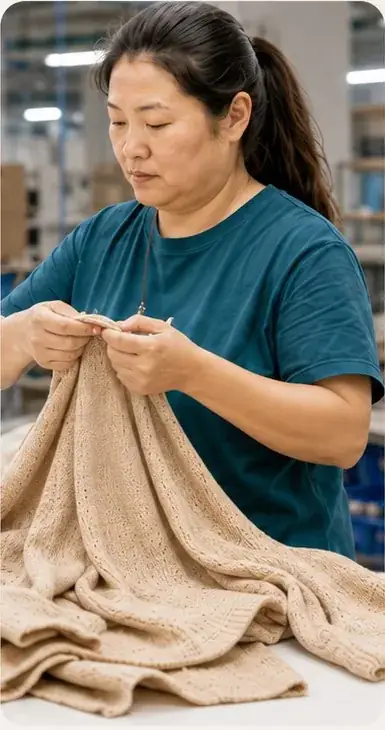
A first sample is not a miniature production order. It is a working version of the garment that helps the buyer and factory identify what is right, what requires adjustment and what needs a clearer approval standard. Looking only at whether it resembles the original image leaves the most important questions unanswered.
A practical first-sample review
01 · FIT
Check the intended silhouette on a body
Lay-flat measurements are necessary, but they do not show how a sleeve hangs, how a neckline sits or whether the body balance matches the intended customer. Use a consistent fit model or mannequin, and photograph front, back and side views when commenting.
02 · HAND FEEL
Judge yarn and weight together
Ask whether the garment feels too dry, too heavy, too loose or too compact for its commercial purpose. A desired handfeel may require a change in fibre direction, yarn specification, gauge, density or finishing; it is rarely solved by one adjustment alone.
03 · SURFACE
Look at stitch definition and density
Review the texture at normal viewing distance and close up. Check if the stitch is open or compact enough, whether pattern scale is correct, and whether the fabric recovers after gentle stretch. Tie the comment to a visible area of the sample.
04 · MEASUREMENTS
Confirm a measurement method before changing a number
Body length, chest width, shoulder, sleeve length, neck opening and rib measurements should be checked in the same relaxed or stretched condition every time. A number without method can create another round of misunderstanding.
05 · MAKE-UP
Inspect the details that affect perceived quality
Review linking, seams, neckline, placket, rib attachment, loose ends and the transition between body and trim. These small areas often influence how finished a knit garment feels, even when the overall silhouette is right.
06 · FINISHING
Record the effect of washing and pressing
Finishing can change handle, dimensions, surface and drape. If it is relevant to the project, confirm whether the sample has received the intended finish before deciding that a construction needs changing.
How to give comments a factory can use
Group comments by priority: must change, should review and optional. Use photographs with arrows, give a measurement or reference point where possible, and explain the desired result. “Make the body less wide” becomes actionable when it says “reduce the chest width by 2 cm in the relaxed lay-flat condition; retain current shoulder width.” This makes a revision easier to confirm and protects the buyer’s original intention.
Before bulk confirmation, turn approved observations into a shared record: material direction, sample reference, measurements and tolerances, colour approval, labels, packing and relevant finishing or inspection points. See our bulk confirmation guide for the final handover checklist.
FAQ
Sample review questions
Should the first sample be perfect?
Its purpose is to reveal the project’s decisions. A useful first sample may lead to changes, provided those changes are reviewed clearly and documented before the next stage.
Can fit and handfeel be approved separately?
They can be discussed separately, but they interact in knitwear. A yarn or density change can alter drape, stretch and fit, so confirm the effect on the whole garment.
What should be saved from the sample review?
Keep labelled images, measurements, material and construction notes, colour references, comment versions and the final approval record. They become the basis for production communication.