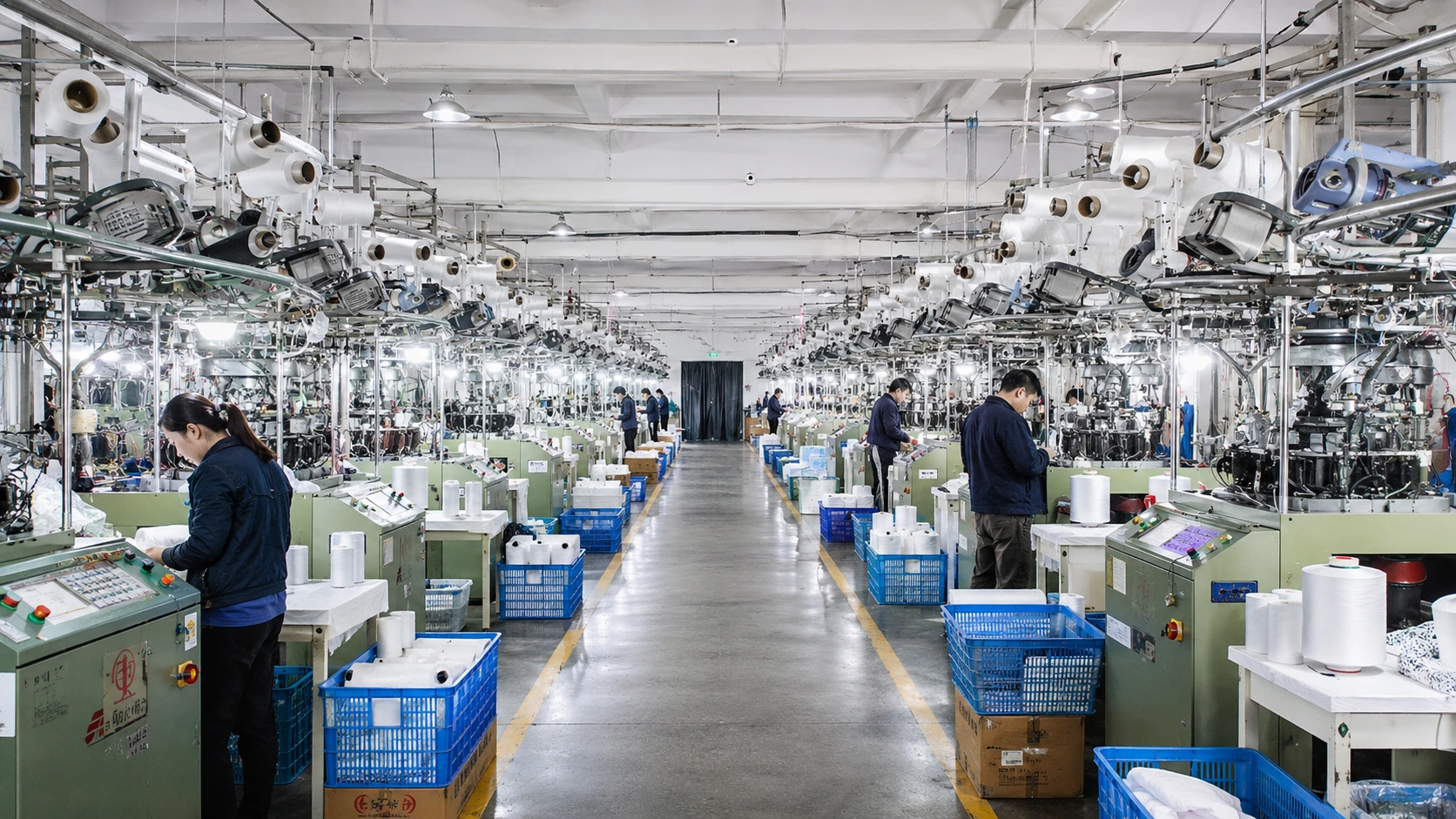
For a fashion buyer, the first message to a knitwear manufacturer is not a test of who can offer the lowest number. It is the moment to check whether the factory can understand the intended garment, identify the open decisions and suggest a sensible route from idea to approved sample and bulk production.
Knitwear depends on early choices. Yarn, gauge, stitch construction, density, shape and finishing influence one another. A photograph can communicate a mood, but it cannot by itself specify what the garment needs to feel like, how it should hold its shape, or how it should be produced. The first conversation should establish those assumptions clearly enough for a factory to assess feasibility.
What a custom knitwear project usually looks like
DIRECTION
Product idea
Reference images, season, target customer and silhouette create a shared starting point.
FEASIBILITY
Materials & MOQ
Yarn route, gauge, construction, colours, sizes and quantity must be considered together.
SAMPLE
Development review
The sample makes handfeel, density, fit, measurements and make-up details visible and testable.
BULK
Confirmation & delivery
Approved standards are turned into material planning, production, quality checks and packing requirements.
What to share in your first message
You can start from a sketch, reference garment, mood board or product image. The factory does not need every answer on day one, but it needs enough context to distinguish a design wish from a workable development plan.
Product type and visual reference
State whether the project is a pullover, cardigan, dress, vest or knit top. A front and back reference, details of neckline and sleeves, and notes on intended fit are more useful than a single small image. If a reference is from another brand, use it as a direction rather than assuming every detail can be copied.
Target customer, season and intended handfeel
Explain where and when the garment will be sold, the desired price level and how the wearer should experience it: lightweight and dry, soft and brushed, compact and structured, or relaxed and airy. This gives the development team a reasoned basis for proposing fibre and construction directions.
Material, gauge and surface-effect priorities
You do not need a supplier yarn code to start. Describe the fibre preference, whether synthetic fibre is acceptable, the desired texture and any visual features that cannot change. Cable, rib, intarsia, jacquard, openwork and embroidery all introduce different development questions. A responsible factory should identify these, not simply answer “yes, we can make it.”
Quantity with colour and size breakdown
A total unit number is only the beginning. One colour with a practical size ratio is different from several colours with a small allocation in each. Share the expected breakdown even when it is provisional; it allows the factory to discuss a realistic MOQ and sourcing route. Read our custom knitwear MOQ guide for the full logic.
Sample, launch or shipment timing
Give the real date that matters to your business: a fitting meeting, sales appointment, shoot, launch or shipment. The development team can then work backwards through material confirmation, sample reviews, bulk booking and packing. An early date is useful only when it is shared honestly.
How a factory should assess your reference
A meaningful feasibility response is more than a quick promise. It should separate what is visible in the reference from what still needs confirmation: possible yarn direction, gauge and stitch route, likely measurement questions, sample priorities, material sourcing risks, quantity assumptions and an appropriate next step. Specific questions from the factory are usually a positive sign. They prevent a sample, quotation or delivery promise from being built on an unknown assumption.
At DALANG SMART KNITTING, project questions are reviewed against the development and production steps that follow: yarn, knitting construction, sampling, confirmation, quality checks and packing. That is why a useful initial reply may include questions about handfeel, colour count, size ratio, labels or desired timing.
The first sample is a working decision, not a small bulk order
Use the first sample to make the intended garment specific. Review silhouette and fit on the relevant body or mannequin; handfeel and weight; surface texture and density; stretch and recovery; measurements; neckline, placket and linking quality; and wash or finishing effect where applicable. Keep comments tied to images, measurements and priority order. “Make it better” is not actionable; “reduce body width by 2 cm, retain the sleeve length, and keep the current texture” is.
Do not compare quotations until product assumptions are aligned. Material, gauge, construction, consumption, quantity, colours, labels, packing, testing and delivery scope can all change a cost. Our guide to comparing sweater quotations explains the buyer checklist.
FAQ
Questions buyers ask before development
Can I begin without a Tech Pack?
Yes. A reference image or sketch plus product type, desired handfeel, estimated quantity, target market and timing can support an initial feasibility discussion. Technical details can be developed and confirmed through the sample stage.
What should I ask a China knitwear factory first?
Ask how it would interpret the reference, what information it needs to assess feasibility, which material and construction assumptions are open, what the sample will validate, and how your quantity and timing affect the route.
Will a factory give an exact MOQ and price immediately?
It can often provide a project direction, but exact terms should be confirmed once material, construction, colour and size mix and service scope are sufficiently defined.