
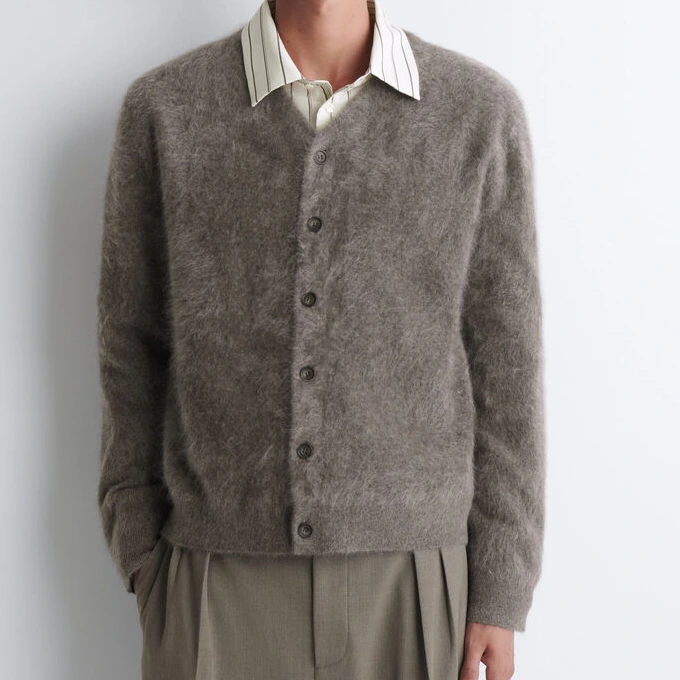
A request for a chunky look might mean visible large loops, greater substance or a lofty handle. Identify the essential feature in the reference before discussing yarn and knitting proposals. This guide introduces fine-, mid- and coarse-looking directions while keeping weight, coverage and handle as separate requirements to evaluate.
Common gauge reference ranges
The SHIMA SEIKI glossary groups 3–5G as coarse, 7–10G as middle and 12–21G as fine. These are source reference categories, not gauge assignments for the photos or a claim that DALANG offers every gauge. Confirm the actual machine and proposal.
SHIMA SEIKI ↗Separate four variables
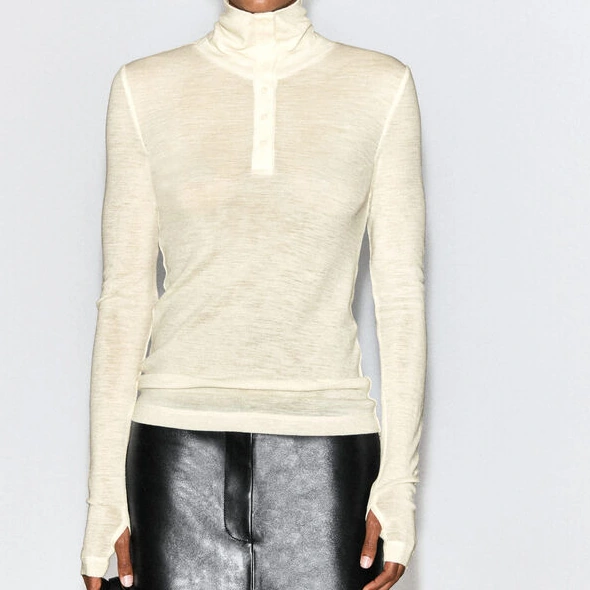
Machine gauge describes needle density per inch. Yarn size describes the yarn, while swatch density records actual stitches and rows over a measured distance. Thickness and garment weight describe the result. Record these separately. A photograph with no published machine specification can establish a visual target, but not an exact gauge.
- What to check in the sample
- Check parameter names, units and the condition in which measurements were taken.
A useful way to brief the factoryUse this image for appearance; propose machine gauge, yarn and finished swatch density separately.
USE THIS IN A STYLE BRIEFName the variable you want to change: loop scale, surface hair, thickness or weight. Using the same style reference makes each revision easier to compare.
Fine-looking surfaces: smoothness and edges
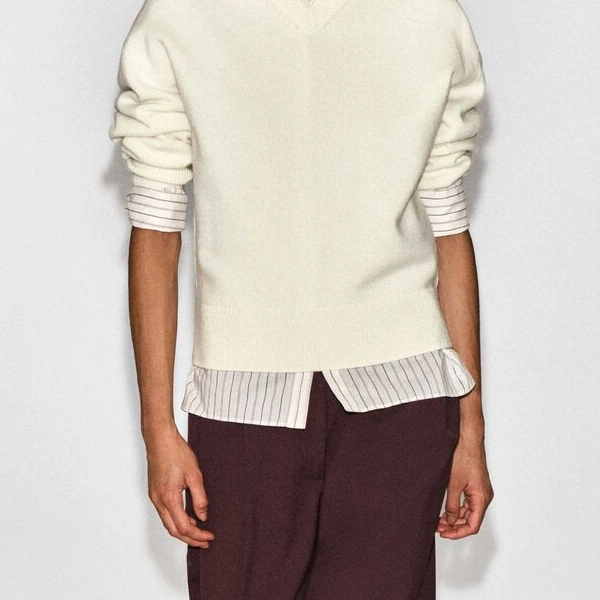
A pale fine-looking surface makes smoothness, neckline edges and small loops easier to inspect. This cream merino layered jumper offers a visual reference; the photograph does not establish its exact machine gauge. Check coverage and next-to-skin behaviour under the intended lighting and use.
- What to check in the sample
- Check pale-colour coverage, seam bulk, stretch on the body and trim flatness.
A useful way to brief the factoryWe want a fine-looking layer; assess weight and coverage together.
USE THIS IN A STYLE BRIEFUse a smoother-looking surface to compare detail definition. Check coverage separately for pale styles so a refined appearance and wearing requirements are reviewed together.
Mid-gauge direction: balance layering and body
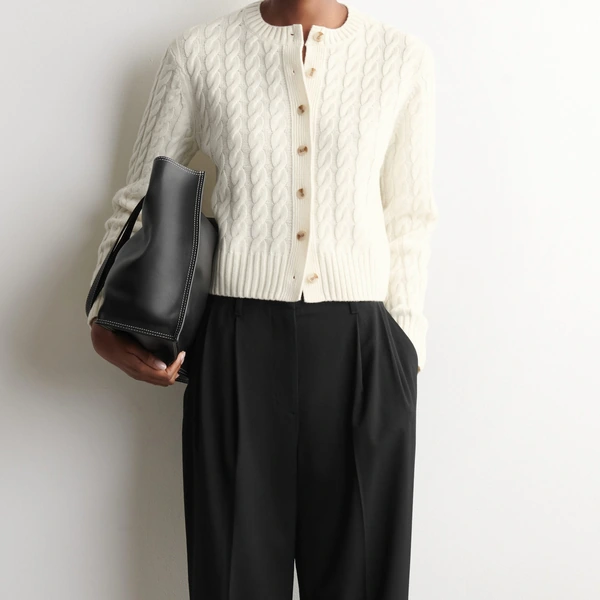
Mid gauge is a useful direction when seeking moderate body, not a fixed thickness. This ivory merino cable cardigan shows raised texture and body; the photograph cannot confirm an exact machine gauge. Compare sample weight and handle, then check the neck and sleeves beneath an outer layer.
- What to check in the sample
- Compare equal-size samples for weight, sleeve bulk and measurements after care.
A useful way to brief the factoryWe want an everyday cardigan with moderate body; propose two weight options.
USE THIS IN A STYLE BRIEFDecide how pronounced the texture and how structured the body should be, then compare swatches. A mid-gauge direction does not replace weight and fit requirements.
Chunky effects: larger texture, larger details
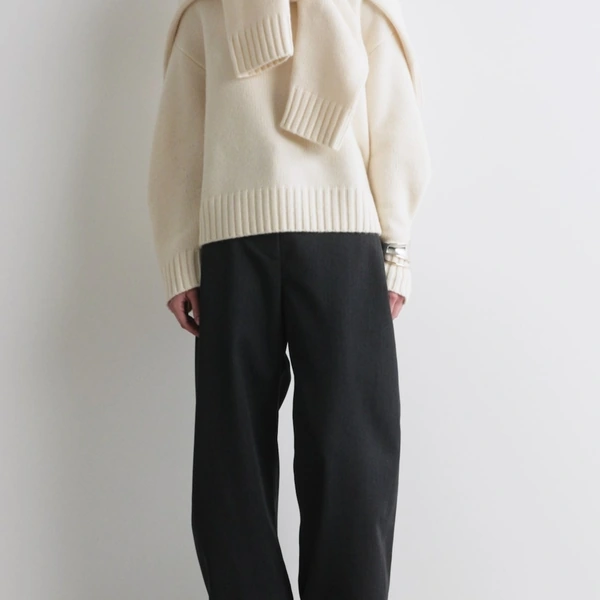
Chunkier knitting enlarges stitch scale and makes trims and joins more noticeable. This pale chunky cashmere funnel-neck jumper helps compare the body with broad rib trims; its exact machine gauge needs separate confirmation. If graphics will be added, check whether their detail fits the proposed stitch grid.
- What to check in the sample
- Review repeat size, seam bulk, total weight and changes during hanging.
A useful way to brief the factoryWe want visible stitch scale; compare pattern definition in the proposed yarn first.
USE THIS IN A STYLE BRIEFReview pattern scale, body proportions and trim volume together for a chunky look. Mark the essential relationships in the reference to assess the whole garment.
Thickness and coverage: make separate decisions

Thickness and coverage should be assessed separately. This ivory pointelle cardigan shows the relationship between open stitches and coverage. Eyelet size, underlayer colour and stretch all affect transparency. Finish the swatch as agreed, then check it both relaxed and worn.
- What to check in the sample
- Compare after finishing, in the relaxed state and at the intended wearing stretch.
A useful way to brief the factoryTreat the approved swatch handle, weight and coverage as the target, not a gauge number alone.
USE THIS IN A STYLE BRIEFLightweight, thin and open describe different things. Record weight, substance and coverage under intended wear separately instead of using one word for all three.
Turn the reference into a clear brief.
| Parameter | Describes | Does not replace |
|---|---|---|
| Machine gauge | Needle density | Finished swatch density |
| Yarn size | Yarn specification | Garment thickness and weight |
| Swatch density | Measured stitches and rows | Machine specification |
| Weight | Material mass | Coverage or warmth conclusions |
Four steps for sample review
- Mark the desired stitch scale instead of only requesting a chunky look.
- Record yarn, machine gauge and stitch for each proposal.
- Compare equally finished swatches for handle, dimensions, weight and coverage.
- Keep the approved swatch and finalise specifications after garment review.
Common questions
Is 12 gauge always thinner than 7 gauge?
Gauge alone cannot decide thickness; yarn, stitch and knitting settings also matter.
Can a photo confirm the gauge?
Not reliably without scale and source specifications. Establish the visual target, then verify the sample and machine.
Can I discuss a style without knowing its gauge?
Start with a clear reference, a physical handle sample and the intended use. Describe loop scale, thickness, weight and coverage separately, then assess gauge with the proposed yarn, stitch and equipment.
Choose the target surface before comparing proposals
Begin with the appearance and handle you can describe or show. Confirm the actual machine and yarn combination against the proposed construction.
- Mark loop or texture scale in the reference and state season, desired weight, handle and coverage.
- Compare swatches under consistent finishing and observation conditions; record known yarn, machine-gauge and fabric-density details.
- Return to the garment to review substance, overall weight, drape and trims, checking whether other requirements survive the surface change.
Describe the knit character you want
Bring a surface reference, seasonal use and handle requirements. If gauge is undecided, identify the texture to retain and the weight or coverage you want to control.
Discuss a knit-surface brief ↗Technical references
Confirm construction and performance with agreed samples and appropriate testing. The following references provide further reading.
- SHIMA SEIKI · Gauge / Fine Gauge / Intarsia Glossary
- STOLL · Knit and Wear
- Tricotta · Yarn Weights
Product photographs are design references, not a claim about DALANG project work.
A customer enquiry: gauge is only one part of the brief
A buyer described a soft, open and relaxed knit direction and asked for yarn recommendations that could work with the intended machine gauge. That is a useful starting point, but the desired weight, hand feel, yarn and structure still need evaluation together. This was a development enquiry; the available record does not establish an approved swatch or final gauge.