
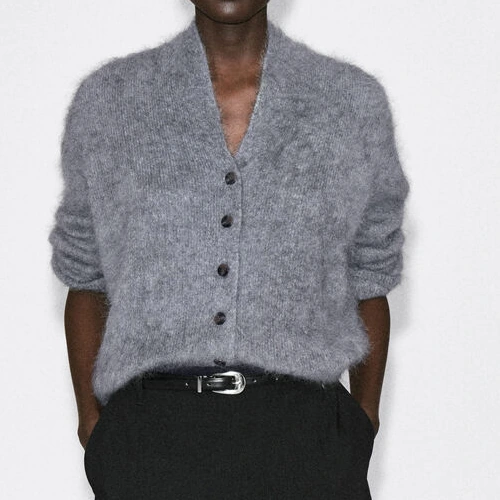
A reference may show a cardigan open, fastened at one button or only in a standing pose. Your own style also needs a primary wearing mode, layering thickness and closure requirements. These six routes connect necklines, plackets and trims so a preferred look becomes a set of fitting and operation checks.
V-neck cardigans: connect neckline and placket
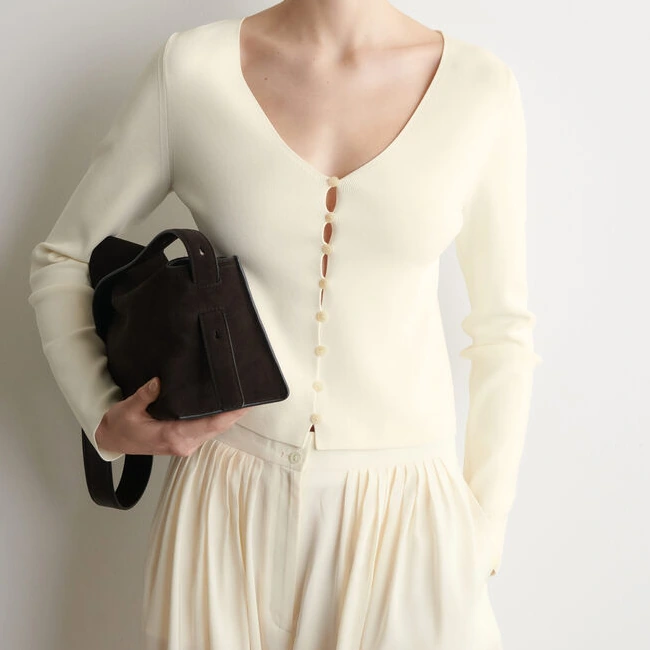
On a V-neck cardigan, the angled trim flows into the opening. This pale example helps read the relationship between drop and button position. Agree the first button and band width, then inspect flatness when fastened and how both fronts hang when opened. Check unwanted strain separately from intentional styling.
- What to check in the sample
- Check the V-point, first button, matching band lengths and open hang.
A useful way to brief the factoryKeep a clean V-neck line and confirm first-button position together with the drop.
USE THIS IN A STYLE BRIEFMark the V point, first button and usual wearing mode. Review the continuous neck/placket line both laid flat and on the wearer.
Crew-neck cardigans: align the top edge
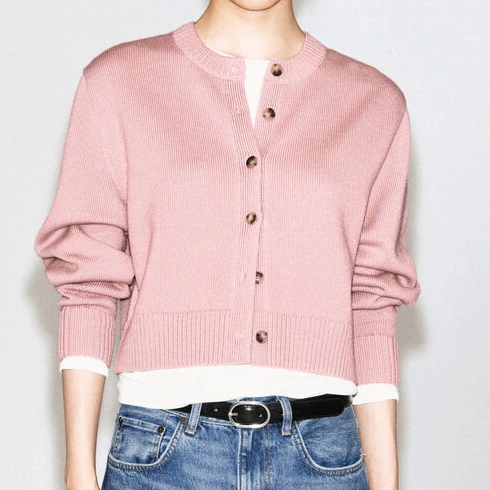
A crew-neck cardigan concentrates attention at the top opening, where buttons meet the neck trim. This shorter piece is layered over white and has a broad hem rib. Fasten it to the top to assess symmetry and throat room, then check chest coverage over the intended underlayer.
- What to check in the sample
- Review top button, neck-edge levels, gaps between buttons and hem fit.
A useful way to brief the factoryThe crew neck should remain comfortable fully fastened without unintended chest gaping.
USE THIS IN A STYLE BRIEFFor buttoned wear alone, define coverage and gaping requirements. For layering, include the intended underlayer in sizing and fitting conditions.
Funnel-neck cardigans: control the upper opening
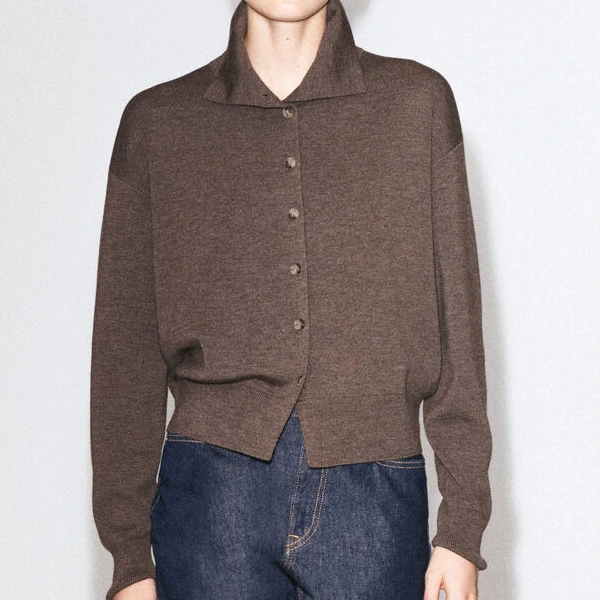
A standing collar changes character as its upper buttons open, so height and button placement need coordination. This brown cardigan shows a taller collar folded open. Review fully closed, top-open and intended everyday states, checking that the collar settles naturally in each rather than approving one pose only.
- What to check in the sample
- Check inside neck comfort, upper button positions and the opened fold.
A useful way to brief the factoryUse a low standing collar that settles naturally with the top two buttons open.
USE THIS IN A STYLE BRIEFShow the intended closed and open top and whether the collar should sit close or open naturally. Review both states with the placket length.
Full-zip knit layers: keep the front flat
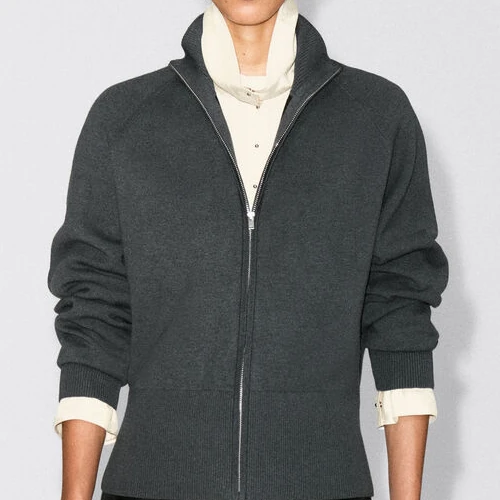
A full zip creates a clear centre-front line. This dark knit layer shows the opening extending from neck to hem. The relationship between zip length and knitted edge matters for flatness. Specify the fastening arrangement, slider, lower end and inside finish, then reassess after the intended care process.
- What to check in the sample
- Check rippling, bottom alignment, top comfort and repeated operation.
A useful way to brief the factoryUse a fully opening zip with a flat front after care; confirm slider details separately.
USE THIS IN A STYLE BRIEFAgree zip type, length and inside finish, then review them with the proposed fabric. Assess rippling across panels, placket and hardware together.
Collars and pockets: position before decoration
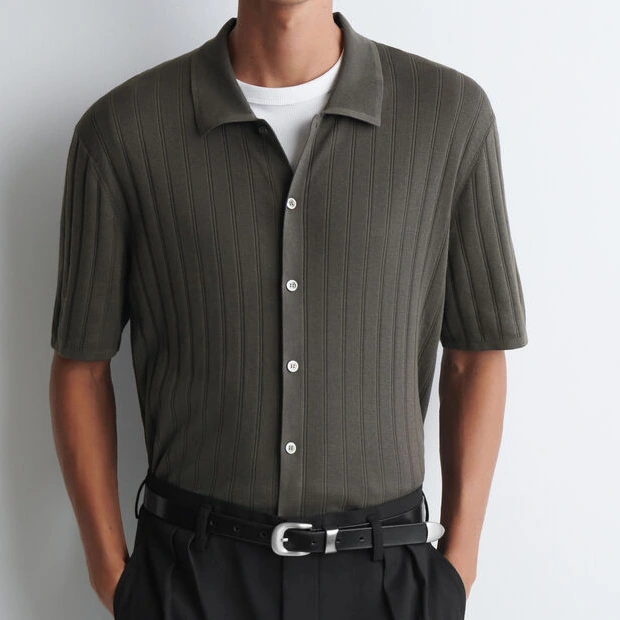
A collar and centre opening concentrate detail on the upper body. This short-sleeved fully opening knit illustrates collar and button placement, without showing chest pockets. If pockets are required, provide opening, depth and placement specifications separately, then test the intended contents for sagging. Do not infer a pocket construction from this image.
- What to check in the sample
- Check pocket openings, alignment, loaded sag and the overall front.
A useful way to brief the factoryConfirm pocket placement from measurements and review its appearance with light contents.
USE THIS IN A STYLE BRIEFPlace pockets and collar on the full drawing and specify location and intended use. Separate decorative proportions from functional requirements.
Short-sleeved cardigans: button spacing shapes the look
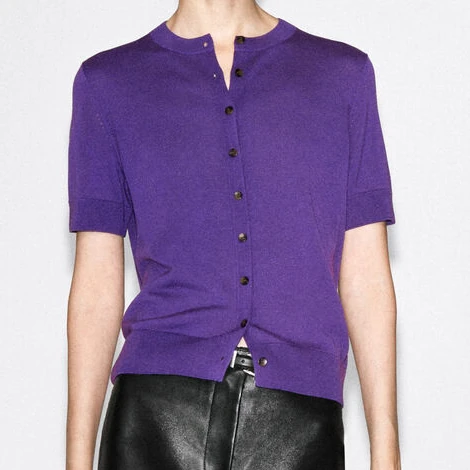
A short-sleeved cardigan may be worn as a top, making the front closure central to the design. The purple example is styled partly open at the bottom; do not turn that styling choice into a specification unintentionally. Define full fastening, any intentional lower opening and the expected coverage when seated.
- What to check in the sample
- Review button spacing, chest/waist coverage, seated fit and sleeve-opening comfort.
A useful way to brief the factoryThis should work as a standalone top; prioritise coverage and flatness fully fastened.
USE THIS IN A STYLE BRIEFState which buttons are normally fastened and the intended bottoms, then review first and last button positions. Movement fitting adds information a static reference cannot show.
Turn the reference into a clear brief.
| Detail | Specify | Sample review |
|---|---|---|
| Button front | Band, count, spacing, holes | Fully fastened and open |
| Zip front | Length, slider, ends, inside | Repeated use and after care |
| Neckline | Height/drop and first closure | Front/side in different states |
| Pockets | Placement, depth, opening | Empty and lightly loaded |
Four steps for sample review
- Define whether it is a top or layer and how it is fastened.
- Specify neckline, front bands and hardware on one schematic.
- Try fully fastened, partly opened and fully open states.
- After care, review front edges, buttonholes and pockets again.
Common questions
Can changing buttons affect the garment?
It changes visual proportion and may require new checks of holes, weight and band support.
Is rippling only a zip problem?
No. Review knitted-edge length, assembly and dimensional changes after care together.
Can closure details wait after choosing the cardigan shape?
Early discussion can focus on the silhouette, but button or zip specifications form part of the placket and closure proposal. Assess key trims with the relevant sample details and recheck after substitutions.
Review styling, placket and closure together
Cardigan appearance and closure function are connected. List the wearing states in advance so sample comments refer to specific areas.
- State the main open, fully fastened or partly fastened mode and provide neckline, placket and layering references.
- Agree button/zip and pocket positions and relevant dimensions on the drawing; record hardware style and specifications.
- Review standing, movement and closure operation separately, recording coverage, placket flatness and inside contact.
Start with how your cardigan will be worn
Bring style references, wearing mode, layering and button or zip direction. If a sample exists, mark gaps, rippling or operation issues so the discussion can focus on the details to resolve.
Discuss cardigan details ↗Technical references
Confirm construction and performance with agreed samples and appropriate testing. The following references provide further reading.
- Woolmark · Introduction to Knitwear
- CottonWorks · Shrinkage & Skewing
Product photographs are design references, not a claim about DALANG project work.
A customer brief: the front and the inside both need definition
A brand described a tailored V-neck cardigan with a button front and asked for an interior lining as part of the concept. The project did not yet have final measurements or material specifications. Discuss the neckline, placket and lining together, then confirm the fit and construction in development. The record is an enquiry and does not establish a completed sample.