
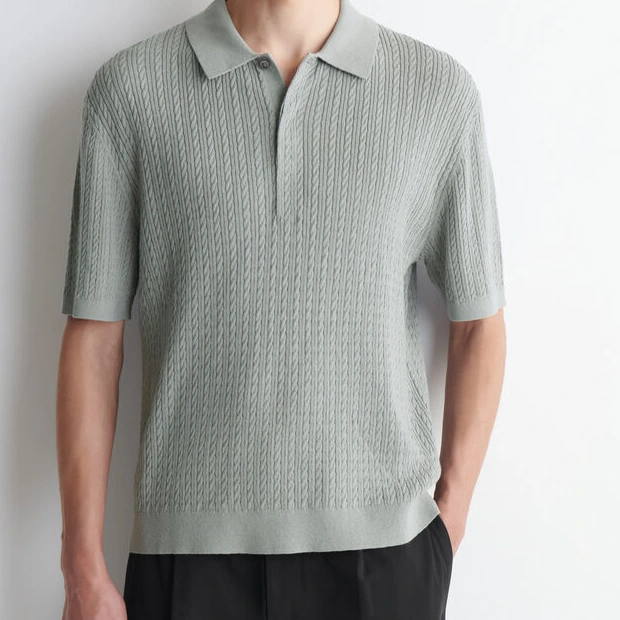
A reference photo can show the texture you like without explaining its reverse, handle or weight. Separate the brief into the appearance to preserve, the wearing effect you want and the details a swatch must resolve. The six terms below provide a starting vocabulary; one sweater may combine several. Understanding their differences makes it easier to compare proposals for your own product.
Garment photos illustrate visual effects. Confirm the actual jacquard, intarsia or other method with artwork, the reverse and a physical swatch.
Plain knit / Jersey
SMOOTH SURFACE
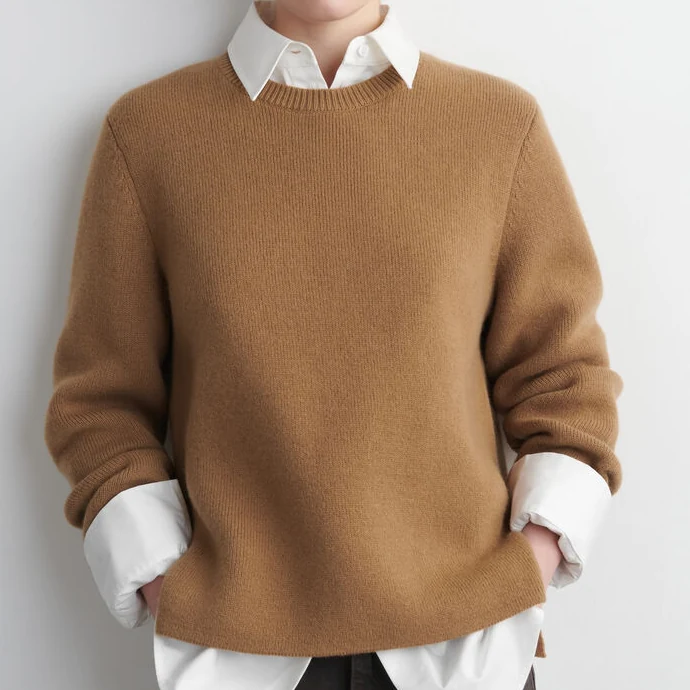
A clean starting point for a sweater design.
Plain knit, also called jersey or stockinette, usually shows small V-shaped stitches on its face and curved loops on the reverse. It can provide a quiet background for colour, shaping or a special yarn. A plain surface does not tell you whether the garment is lightweight or heavy: yarn, gauge, stitch length and finishing all matter.
- Where it works
- Everyday pullovers, fine-knit tops and simple cardigan bodies.
- What to check in the sample
- Check coverage, drape and measurement stability. Unfinished single-jersey edges can curl, so agree the neckline, hem and edge finish.
A useful way to brief the factory“We want a smooth jersey body with enough coverage for a light-coloured top.”
Technical reference ↗
USE THIS IN A STYLE BRIEFFor a clean everyday style, compare surface definition, drape and coverage, then supply separate neck and hem references. A simple surface still needs a precise finish brief.
Rib knit
RIDGES & STRETCH
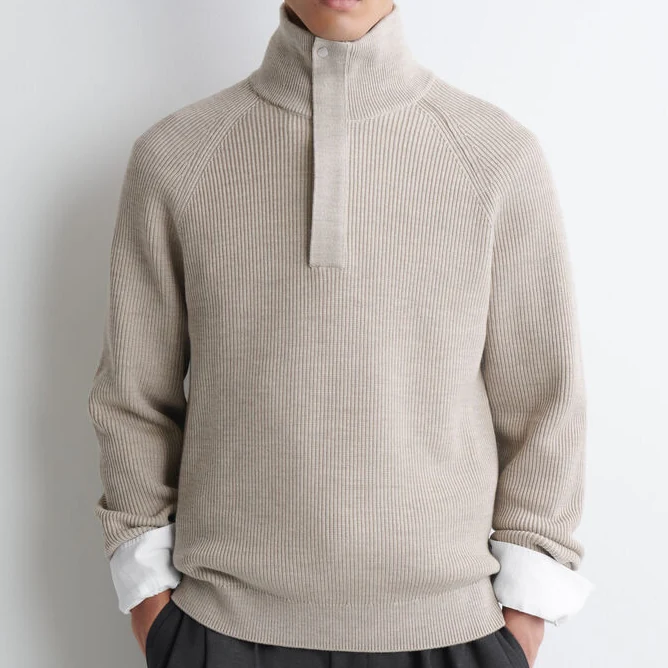
A useful route for close-fitting shapes and knitted trims.
Rib combines knit and purl columns to create a ridged surface. Common descriptions include 1×1 and 2×2 rib, although many other arrangements exist. Rib often has useful widthwise stretch. Stretch and recovery are different: a fabric that opens easily may not return well after wear, especially if the yarn and finishing are unsuitable.
- Where it works
- Fitted tops, knit dresses, cuffs, neckbands and waistbands.
- What to check in the sample
- Agree whether measurements are taken relaxed or stretched. Review recovery, sheerness when worn and growth after the agreed care treatment.
A useful way to brief the factory“We want a fitted rib top. Please review coverage and recovery at the intended fit.”
Technical reference ↗
USE THIS IN A STYLE BRIEFSpecify whether rib forms the body or only a trim. Fit a close-fitting body against target measurements, and assess each rib trim together with the panel it joins.
Cable knit
RAISED TEXTURE
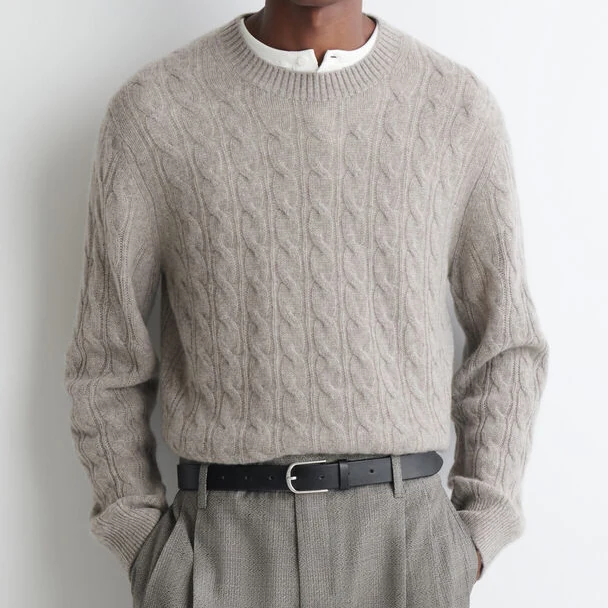
Choose it when the design needs visible depth.
Cable effects are formed by crossing groups of stitches, creating rope-like or braided relief. Cable width, crossing frequency and the space between cables change the look. A cable structure can draw in the fabric width and alter its weight and knitting time, so the dimensions of a plain panel should not simply be reused for a cable version.
- Where it works
- Textured pullovers, cardigans, vests and selected feature panels.
- What to check in the sample
- Review the crossing definition, finished width, weight and how the motif meets armholes or seams. Cable knit does not have to mean a very thick garment.
A useful way to brief the factory“Please keep the cable relief visible without making the garment heavier than the reference.”
Technical reference ↗
USE THIS IN A STYLE BRIEFMark whether cable size, spacing or relief is the essential feature. Compare the proposed swatch for handle and weight alongside that visual priority.
Jacquard knit
KNITTED COLOUR PATTERNS
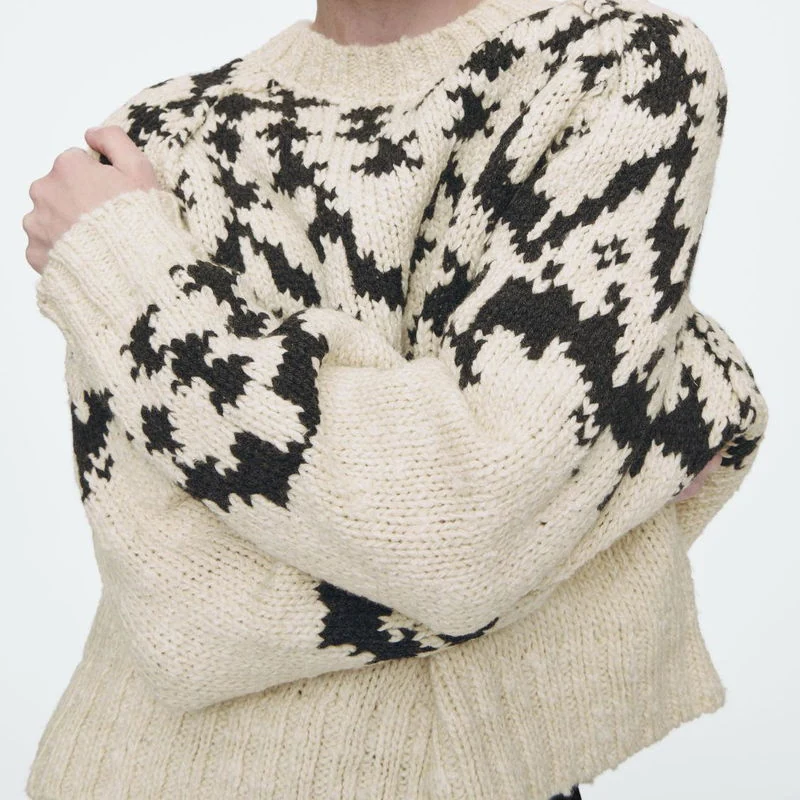
Useful for repeating graphics and patterned surfaces.
In colour jacquard, selected stitches create a pattern using different yarn colours. The reverse may have floats or a knitted backing, depending on the construction. Those choices affect weight, stretch, feel and snagging risk. A face photograph cannot confirm the backing, and the number of colours in an entire design is not the same as the number used in each row.
- Where it works
- Repeating geometric patterns, seasonal motifs and all-over graphics.
- What to check in the sample
- Confirm motif scale, placement, colours per row and the reverse construction. Review readable lettering on a knitted swatch.
A useful way to brief the factory“Please show the front and reverse of the proposed jacquard swatch before garment sampling.”
Technical reference ↗
USE THIS IN A STYLE BRIEFProvide motif scale, placement and reverse-side requirements together. Add next-to-skin wear, lettering or use across sizes to the swatch review where relevant.
Intarsia
SEPARATE COLOUR AREAS
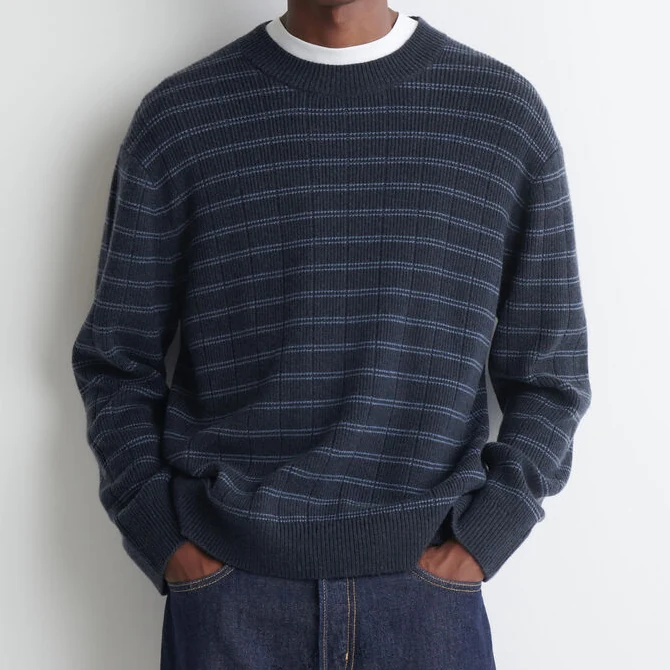
A route to discuss for a large motif or defined colour area.
Intarsia works with separate yarn supplies for different areas and joins neighbouring areas during knitting. In a straightforward intarsia construction, each colour does not need to be carried across the full width behind the other areas. Large blocks and local graphics are common starting points. The joins are part of the construction, not simply a line between colours.
- Where it works
- Large colour blocks, chest motifs and selected letters or graphic shapes.
- What to check in the sample
- Inspect joins for holes, tension changes and distortion. Check yarn tails and the reverse. Intarsia can be combined with jacquard, so choose the route after reviewing the artwork.
A useful way to brief the factory“Please assess whether this large motif suits intarsia, jacquard or a combination.”
Technical reference ↗
USE THIS IN A STYLE BRIEFIdentify the colour boundaries and proportions that must survive before choosing a method. Similar-looking faces still need comparison at joins, on the reverse and in wear.
Pointelle / Openwork
EYELETS & OPENNESS
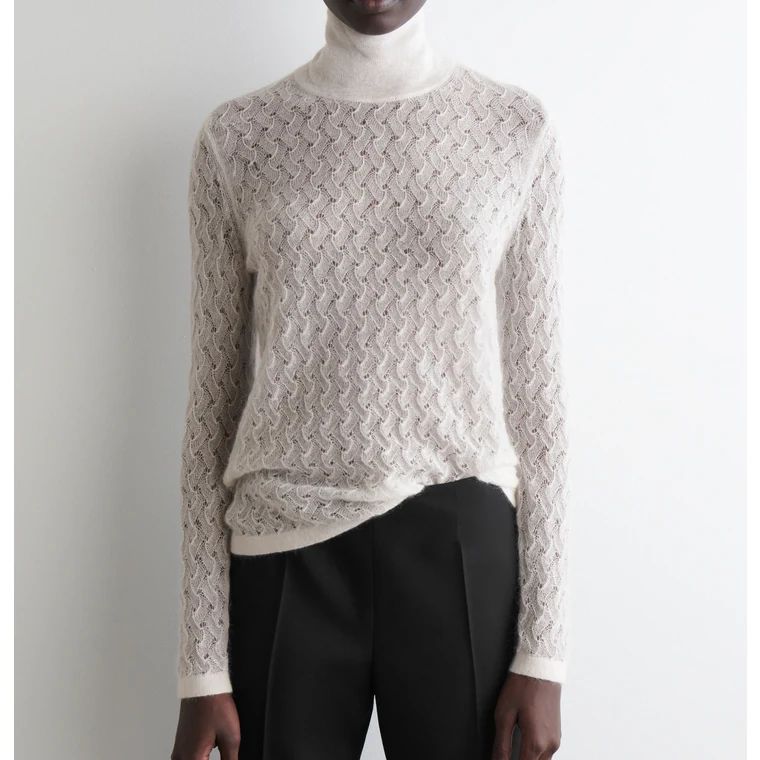
Choose the openness as carefully as the pattern.
Openwork describes knitted effects with deliberate openings. Pointelle commonly refers to delicate, patterned eyelets within this broader family. The openness changes with yarn, structure and tension. A fine openwork top and a loose cover-up can therefore need very different development decisions, even when both references are described as “lace knit”.
- Where it works
- Light layers, summer cardigans, decorative panels and resort cover-ups.
- What to check in the sample
- Review sheerness in the intended fit, stability around openings and snagging. Agree whether a lining or separate underlayer is part of the product.
A useful way to brief the factory“We want small eyelets for a summer cardigan. Please review coverage and snagging in the sample.”
Technical reference ↗
USE THIS IN A STYLE BRIEFClarify whether you want small local eyelets, an open garment or a layered look. Review the swatch at the intended degree of stretch as well as choosing a motif.
Start with the effect you want.
| Design goal | Route to discuss | Confirm first |
|---|---|---|
| A clean, smooth body | Plain knit / Jersey | Coverage, drape and edge finish |
| A fitted shape or stretchy trim | Rib | Relaxed measurements, sheerness and recovery |
| Raised, braided texture | Cable | Crossing definition, width and weight |
| Repeating colour graphics | Jacquard | Scale, colours per row and reverse |
| Large blocks or a local motif | Intarsia, jacquard or a combination | Joins and artwork feasibility |
| Eyelets or an open surface | Pointelle / Openwork | Coverage, snagging and underlayers |
Use the table to shortlist a direction. The final route depends on artwork, yarn, gauge, fit and quantity; one garment can contain several structures.
Four checks before approving the swatch.
- Look at both sides. Review texture, motif edges, floats, yarn tails and joins.
- Check the intended wearing state. Look at coverage and stretch at the target fit, not only in a flat photograph.
- Finish and measure as agreed. Record the care or steaming method, relaxed dimensions and recovery. Agree the acceptance criteria first.
- Review a full garment next. A swatch confirms a local effect. The garment still needs a fit, weight, seam, neckline and overall wear review.
Three common questions
Can I identify jacquard or intarsia from a front photograph?
Often not reliably. Review the reverse, artwork and sample. Industrial knitting can also combine both techniques.
Does stretchy rib automatically keep its shape after washing?
No. Stretch is not the same as recovery. Yarn, construction settings and finishing also affect the result.
Will a matching pattern guarantee matching hand feel and weight?
No. A reference communicates a direction; yarn information and physical samples are still needed to confirm feel, weight, coverage and measurements.
Combination reference: STOLL — jacquard with intarsia ↗
Can I start a discussion with photos but no chosen construction?
Start by marking the desired effect and describing use, handle and approximate substance. Resolve the reverse, method and performance through artwork, yarn selection and physical samples where the photo cannot answer them.
Turn a favourite texture into a reviewable brief
Use a local swatch to agree the surface before judging it in a full garment. Give each review a clear reference and a specific question to resolve.
- Mark the essential texture in the reference, then state use, target substance, handle and intended layering.
- Compare both sides of proposed yarn-and-stitch swatches; record scale, coverage, relaxed dimensions and finishing conditions.
- Review placement, overall weight, fit and neck/sleeve transitions in the garment; separate features to retain from changes requested.
Show us the texture you want to preserve
Planning a knitwear style? Bring references, intended pattern placement, target handle and planned quantity. Let us know whether you already have artwork, a swatch or a garment sample so we can discuss what needs resolving next.
Discuss a stitch or pattern brief ↗Technical references
Confirm construction and performance with agreed samples and appropriate testing. The following references provide further reading.
- CottonWorks — Knit Basics
- CottonWorks — Digital Cotton Basics
- STOLL — Performer: structures and intarsia
- STOLL — Intarsia binding / Gore binding
- STOLL — Jacquard in connection with intarsia
- STOLL — Manual Flat Knitting Training, section 11.1
Product photographs are design references, not a claim about DALANG project work.
A customer brief: choose the technique after reviewing the artwork
A brand asked for an original graphic to be knitted into a sweater and requested guidance on intarsia versus jacquard. The brief identified the intended placement and scale, but a recommendation still requires artwork and sample review. Ask to see the face, reverse and details of a proposed swatch; the enquiry is not evidence that a technique was selected or tested.