
Sizing up can change chest, shoulders, sleeves and body length together without reproducing the intended style. Define the wearer and styling first, then describe ease, outline and length. This guide introduces those dimensions and shows how a fit reference, measurement chart and review notes can help establish proportions for your collection.
Slim: close without unwanted strain
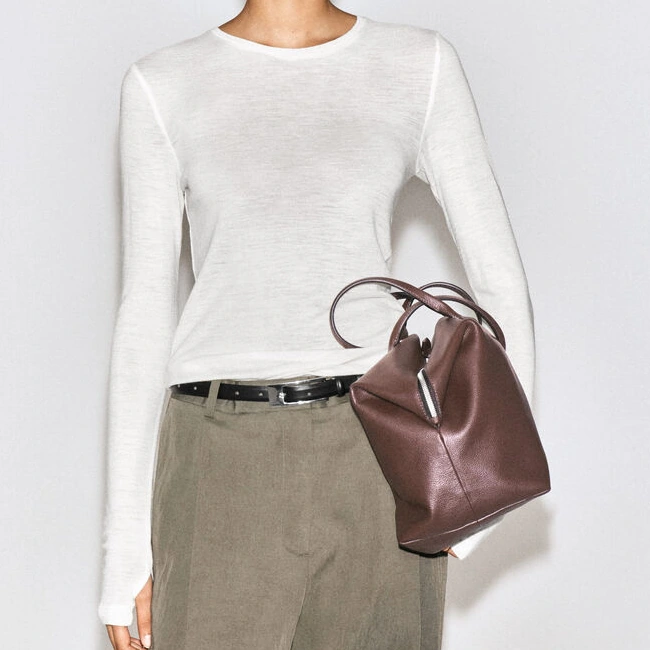
A slim direction follows the body while retaining the intended movement and access. This pale knitted top illustrates a close chest-and-waist outline without establishing a measured ease value. Check upper-arm and underarm restriction, body lift and seated coverage. The close appearance should be intentional rather than an undersized sample.
- What to check in the sample
- Check chest/shoulder strain, upper-arm room, access and coverage when sitting.
A useful way to brief the factoryWe want a close silhouette with room for shoulder/arm movement and the intended length coverage.
USE THIS IN A STYLE BRIEFDistinguish areas that should follow the body from those needing movement room. If worn buttoned, include chest strain and gaps between buttons in the review.
Regular: room for everyday movement
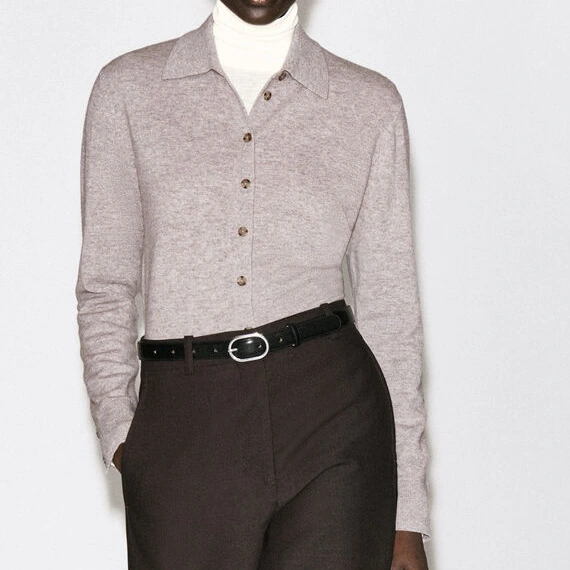
Regular fit is an everyday direction rather than a substitute for measurements. This collared knit provides a straight-body reference. Specify whether it is worn alone or layered, then use the same underlayer to assess chest, upper-arm and cuff comfort. Agree the finished measurements instead of relying on the fit label alone.
- What to check in the sample
- Review coverage and movement when standing, reaching and sitting.
A useful way to brief the factoryAllow moderate room over a light everyday underlayer without a close fit.
USE THIS IN A STYLE BRIEFAn approved everyday fit reference is clearer than regular alone. Record its dimensions and intended underlayer, then identify what the new style should retain or change.
Relaxed: distribute the volume
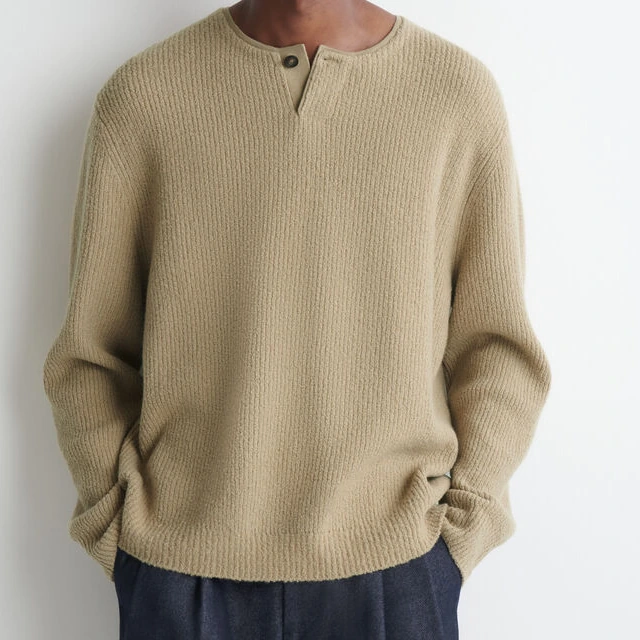
Relaxed fit is not simply extra chest width. Coordinate shoulder, armhole, upper arm and hem so the room forms a coherent outline. This pale textured jumper helps compare body and sleeve volume. Record target body and garment measurements instead of estimating ease from the model.
- What to check in the sample
- Check total sleeve reach, side volume, hem position and compatibility with outer layers.
A useful way to brief the factoryUse a relaxed silhouette without automatically increasing length with width.
USE THIS IN A STYLE BRIEFLocate the desired volume in the chest, shoulder or sleeve and state any length limit. This makes it easier to assess whether added room preserves the intended proportions.
Boxy: define width relative to length
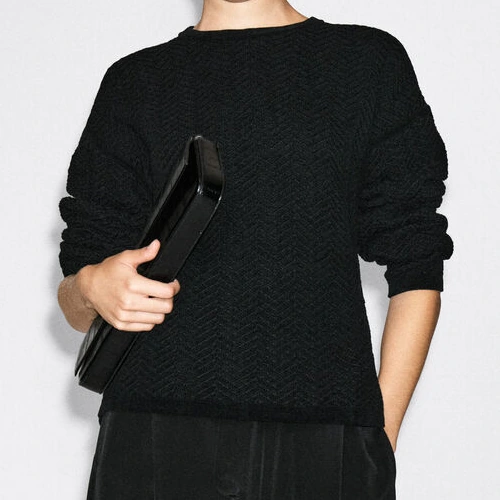
A boxy direction uses straighter sides and a squarer width-to-length relationship, without requiring extreme volume. This dark crew neck helps read body width relative to length, although pose affects the hem. Put chest width, hem width and length on one schematic to distinguish a short-wide shape from an ordinary straight body.
- What to check in the sample
- Review width-to-length proportion, side seams and hem contraction.
A useful way to brief the factoryWe want a squarer straight body without waist emphasis or a tightly contracting hem.
USE THIS IN A STYLE BRIEFDefine boxiness through chest width, hem width and length together, with any waist shaping specified. Include a side reference rather than relying on a front pose.
Cropped and long: a separate length choice
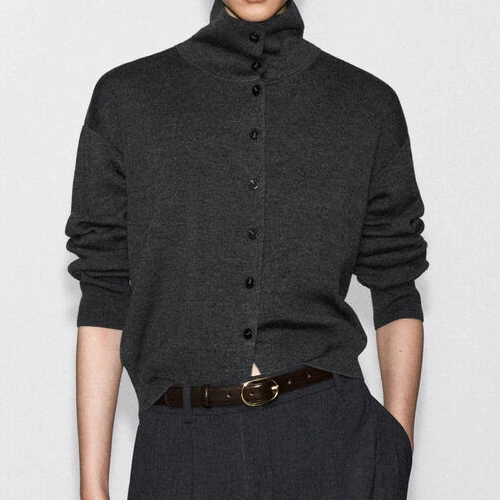
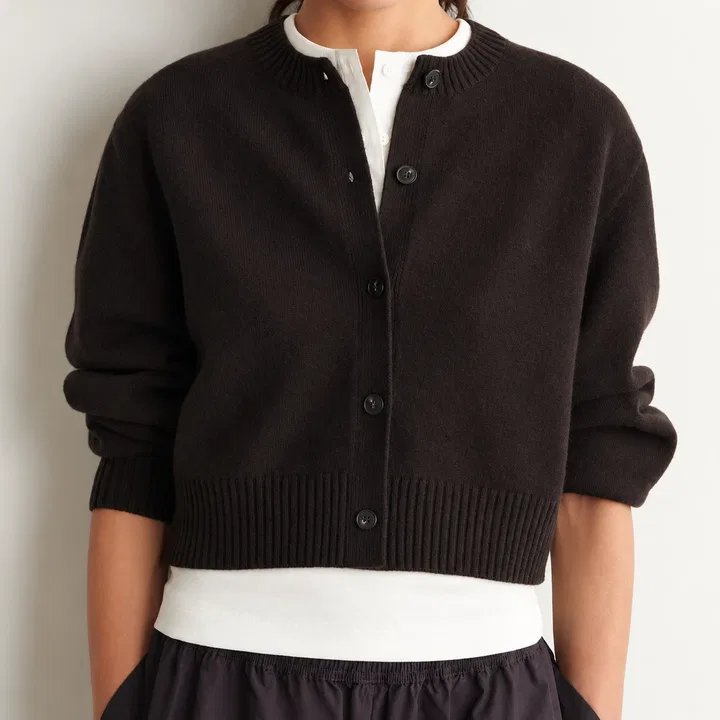
Length is a separate decision from fit. A cropped piece can be slim or roomy. This shorter cardigan illustrates its relationship to an underlayer and waistband. For a long version, add a relevant reference and length specification, then assess hip room, hem movement and pocket placement rather than stretching the short design proportionally.
- What to check in the sample
- Measure from the agreed neck/shoulder point to the hem; check coverage standing and sitting.
A useful way to brief the factorySet the cropped length against high-waisted bottoms and check coverage with raised arms.
USE THIS IN A STYLE BRIEFAgree the relationship to intended bottoms before setting length and movement coverage. Recheck pockets, placket and hem placement when length changes.
Turn the reference into a clear brief.
| Dimension | Possible combination | Confirm |
|---|---|---|
| Ease | Slim / regular / relaxed | Body and garment circumference |
| Outline | Straight / boxy / shaped | Chest, waist and hem relationship |
| Length | Cropped / regular / long | Styling and movement coverage |
| Shoulder/sleeve | Set-in / dropped and others | Total reach and armhole |
Four steps for sample review
- Choose a target body size instead of estimating from the photo.
- Define ease, outline and length independently.
- Provide finished measurements and distinguish half-width from circumference.
- Approve the sample fit, then review whether grading retains the intended proportions.
Common questions
Does sizing up reproduce a relaxed design?
Not necessarily. Length, shoulder and sleeve dimensions may change in unintended ways.
Is a cropped fit automatically flattering?
That depends on body proportions, styling and the intended result; verify it through fitting.
How do I prepare a fit discussion without a full size chart?
Bring the target body or fitting size, a fit reference you like and the areas to change. Agree measuring methods and key dimensions before completing the specification. A model photo supplies silhouette direction only.
Use a shared basis for fit decisions
Photos communicate style; measurements and fitting assess the result. Retain the target size, measurement method and revision notes to compare what changes between samples.
- Define target body measurements, sample size and underlayer, with a silhouette image or physical fit reference.
- Record chest ease, shoulder/sleeve proportions and length separately; agree half-widths, circumferences and measuring points.
- Write location-specific fit notes, separating dimensional issues from design changes; discuss size expansion after the initial size is agreed.
Bring your silhouette and fit reference
Share any style drawing, measurement chart or sample that needs improvement. Describe the wearer, layering and proportions you most want to change so the fit discussion begins with specific areas.
Discuss a fit brief ↗Technical references
Confirm construction and performance with agreed samples and appropriate testing. The following references provide further reading.
- Craft Yarn Council · Body Measurements & Fit
- Lion Brand · How Much Ease Do I Need?
Product photographs are design references, not a claim about DALANG project work.
A customer brief: a fit label needs measurements
One customer described a wide, straight and moderately cropped garment with dropped shoulders; the measurement chart still had to be finalised with the manufacturer. Translate the intended silhouette into agreed points and dimensions, then use those same points for a fitting sample. The enquiry does not confirm that the final fit was made or approved.