
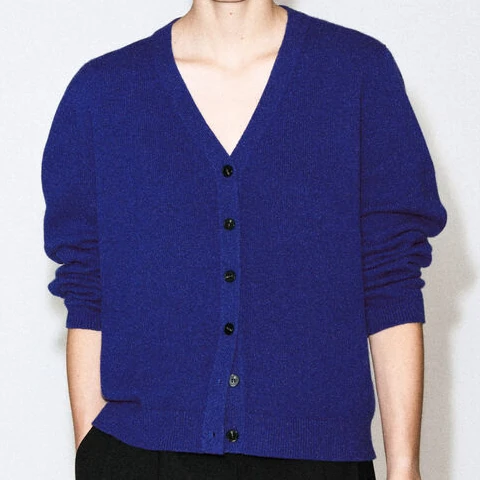
A brand may want softness, lightness, body and easy care at the same time. Rank these priorities to make the material conversation more useful. Composition is a starting point; yarn, stitch and finishing contribute to the final handle and appearance. The six routes below help organise a brief and identify what requires touch, fitting or care evaluation.
Wool: define the desired body
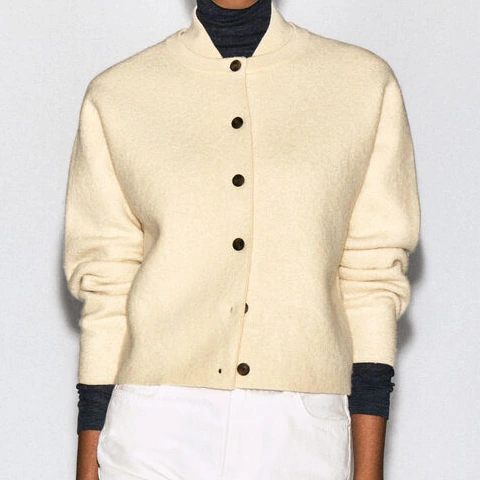
Wool covers many different handles. This pale boiled-wool cardigan offers a compact-surface direction to compare with hairier references. Separate next-to-skin and outer-layer needs, then bring physical examples showing the amount of surface hair, weight and body you want. The fibre name alone does not specify the finished handle.
- What to check in the sample
- Compare neck and forearm comfort, garment weight and shape after wear.
A useful way to brief the factoryPlease offer two wool options with different handles: some loft, without excessive weight.
USE THIS IN A STYLE BRIEFSeparate next-to-skin wear from outer layering, then compare surface hair and body. A physical handle reference helps clarify words such as soft or substantial.
Merino: make softness tangible
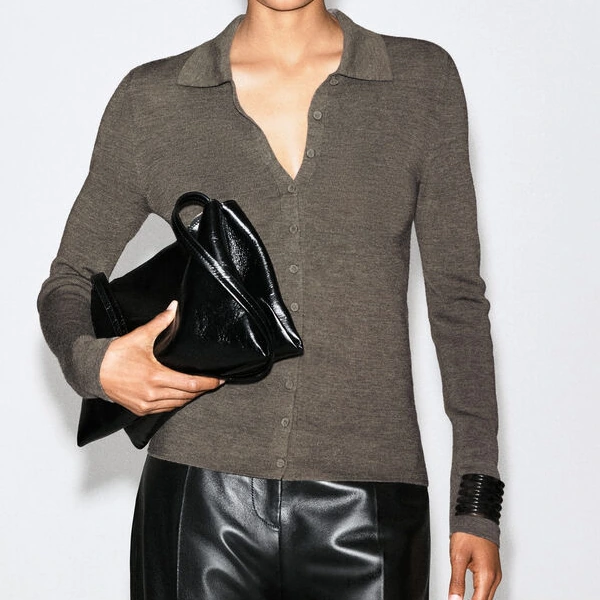
Merino can support a fine, comfortable knitwear direction. This collared knitted style provides a smooth-surface reference, while actual comfort still needs a physical sample. Softness is a requirement to assess rather than a universal guarantee. Machine washability and resistance to pilling also require evidence for the particular yarn and garment.
- What to check in the sample
- Try it with the intended underlayer; confirm care and pilling requirements.
A useful way to brief the factoryThis is for everyday layering close to the skin; compare smoothness and neck comfort first.
USE THIS IN A STYLE BRIEFFor everyday close-to-skin styles, include neck comfort, the intended underlayer and care method in the brief. The fibre name does not replace these checks.
Cashmere: balance handle and structure
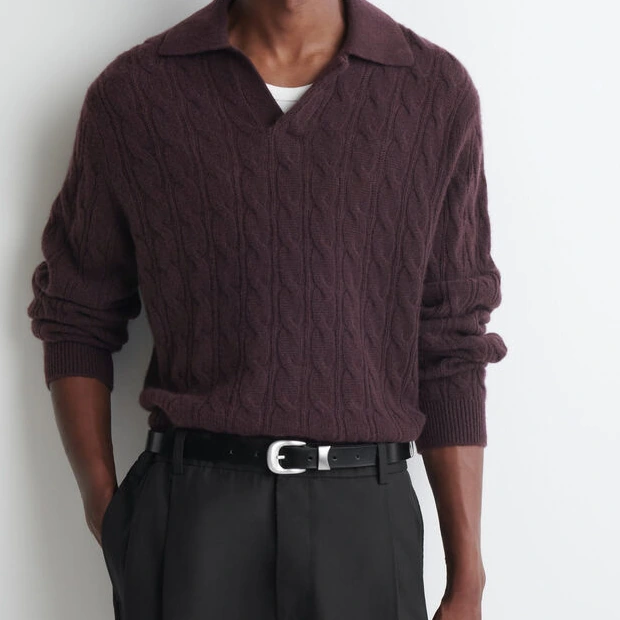
Cashmere comes from the soft undercoat of cashmere goats. A soft handle does not settle the decisions about thickness, cable definition or trim support. This cable-knit example shows that a soft material can also carry raised texture. Keep both a handle reference and an appearance reference so that improving one does not unintentionally change the other.
- What to check in the sample
- Compare surface hair, cable definition and cuff recovery; record the care route.
A useful way to brief the factoryKeep a soft handle and clear cable crossings; please begin with a finished swatch.
USE THIS IN A STYLE BRIEFRank softness, pattern definition and silhouette support. Keep the same visual and handle references when comparing alternatives so the trade-offs remain clear.
Cotton: consider weight and stability
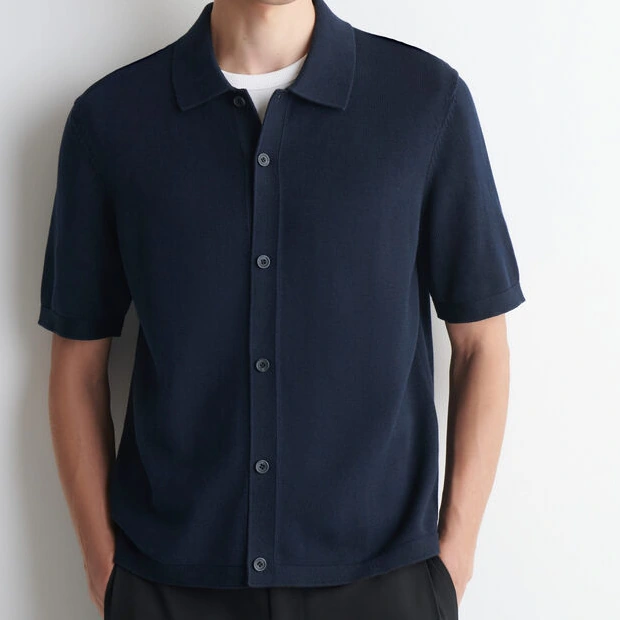
Cotton knitwear extends beyond a basic lightweight top. This dark cotton knitted shirt provides a reference for a collar and smooth body. For a warm-weather brief, review coverage as well as handle. Check length changes during use and measurements after the intended care process rather than assuming that a summer material will remain dimensionally unchanged.
- What to check in the sample
- Compare relaxed and stretched coverage; record measurements before and after care.
A useful way to brief the factoryWe want a fresh summer knit; please balance coverage, weight and stability after care.
USE THIS IN A STYLE BRIEFState target weight and coverage for warm-weather pieces too. If worn alone, compare samples under the same lighting and layering conditions and record dimensions after care.
Mohair: review halo, texture and skin contact
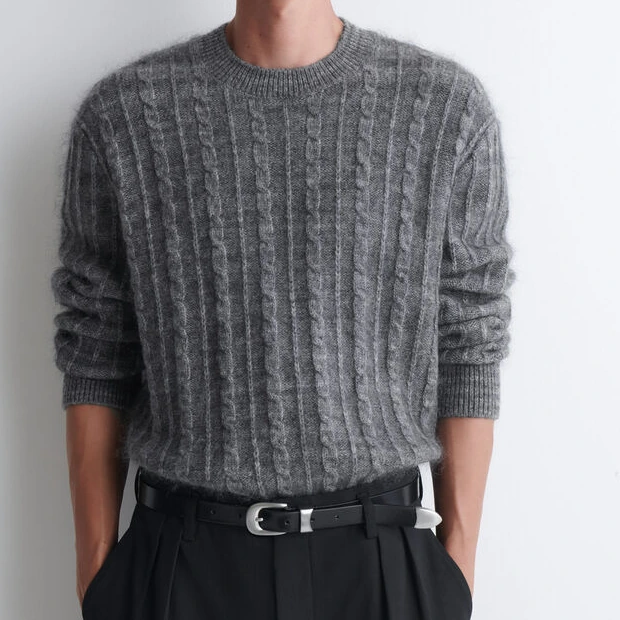
Mohair comes from Angora goats, distinct from Angora rabbit fibre. The grey merino-mohair cable-knit example lets you compare a hairy surface with raised texture. Mohair content alone does not establish transparency or thickness. Evaluate the complete yarn-and-stitch proposal with the intended underlayer and assess whether the halo preserves the desired pattern definition.
- What to check in the sample
- Check whether the halo obscures the pattern, and assess neck comfort and coverage.
A useful way to brief the factoryWe want an airy halo and small eyelets; use this pale layered reference for coverage.
USE THIS IN A STYLE BRIEFDecide whether halo is the visual priority or whether cable and other details need stronger definition. Include skin-contact requirements when comparing surface directions.
Blends: start with the intended result
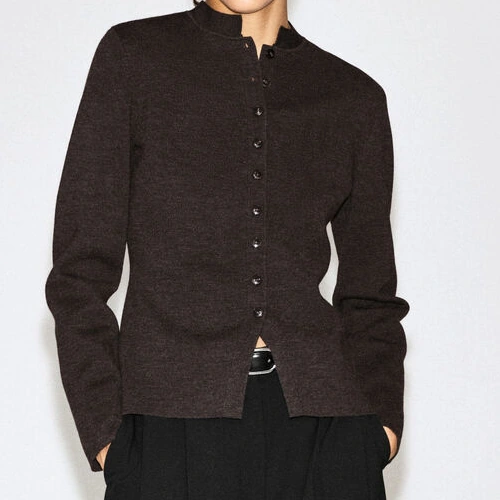
A blend combines fibres for a particular result; it is not automatically a cheaper substitute. This merino-blend cardigan provides a smooth, relatively light-looking reference. State whether you want to change drape, comfort, surface or cost, then compare complete composition and physical samples. Percentages alone cannot reproduce the result when yarn construction or stitch changes.
- What to check in the sample
- Confirm complete composition, colour-to-colour handle, recovery and care labelling.
A useful way to brief the factoryCompare a single-fibre and a blended option against the same handle target.
USE THIS IN A STYLE BRIEFState the specific property a blend should improve. Recompare samples when composition or yarn supply changes rather than treating matching percentages as equivalent.
Turn the reference into a clear brief.
| Goal | Material route | Confirm first |
|---|---|---|
| Smooth layering | Merino or a suitable blend | Comfort and care |
| Soft texture | Cashmere with a suitable stitch | Handle, definition, recovery |
| Warm-weather wear | Cotton or a suitable blend | Weight, coverage, stability |
| Airy halo | Mohair blends and alternatives | Halo, underlayer, comfort |
Four steps for sample review
- Define season, layering and care expectations.
- Compare physical references with similar dimensions and weight.
- Confirm composition and yarn details; retain handle and colour references.
- Apply the agreed care process and remeasure before sample approval.
Common questions
Can a photograph verify cashmere?
No. Use photos to shortlist appearance and documentation or appropriate testing to establish content.
Why can the same composition feel different?
Yarn preparation, count, stitch, knitting settings and finishing all contribute to handle.
How can I start without a chosen composition?
Provide the season, wearing conditions and a physical handle reference, including priorities and unacceptable outcomes. Compare material proposals with the style and swatches, and list performance requirements that still need evaluation.
Start the material discussion with wear requirements
A useful material brief separates appearance, handle and care goals. Retain the corresponding samples and conditions so later changes can be compared against a shared reference.
- State season and skin-contact or layering use; rank softness, weight, silhouette and care convenience.
- Compare composition information, yarn and finished swatches; mark the preferred surface and handle and the changes you can accept.
- Recheck wear and care in the garment sample and link the selected proposal and revision notes to an identified sample.
Start with the wearing experience you want
Bring a style reference, season, handle sample and care expectations to discuss materials. Include any target composition, planned quantity or cost range so the conditions can be considered together.
Discuss material options ↗Technical references
Confirm construction and performance with agreed samples and appropriate testing. The following references provide further reading.
- Woolmark · Introduction to Knitwear
- CCMI · Cashmere and Camel Hair Facts
- Mohair South Africa · Frequently Asked Questions
- CottonWorks · Shrinkage & Skewing
- Tricotta · Fibre Library
Product photographs are design references, not a claim about DALANG project work.
A customer decision: a material alternative has limits
A brand wanted a soft, lightly brushed effect within a defined budget and asked whether a different composition could reduce cost. Alternatives were discussed, but the customer did not accept the proposed level of substitution and was unable to increase the budget for that collection. Agree which characteristics and composition boundaries matter before proposing substitutes; no material test or bulk outcome is established by this exchange.