What happens when
Typical development timeline
Actual dates depend on yarn availability, construction complexity and the season. The ranges below describe a typical first programme for a mid-gauge women's style; your project review ends with a written schedule for your specific development.
| Stage | Typical timing | What is decided |
|---|
| 01 · Project review | Day 0–2 | Product direction, quantity range, timing and the scope of the first development round. |
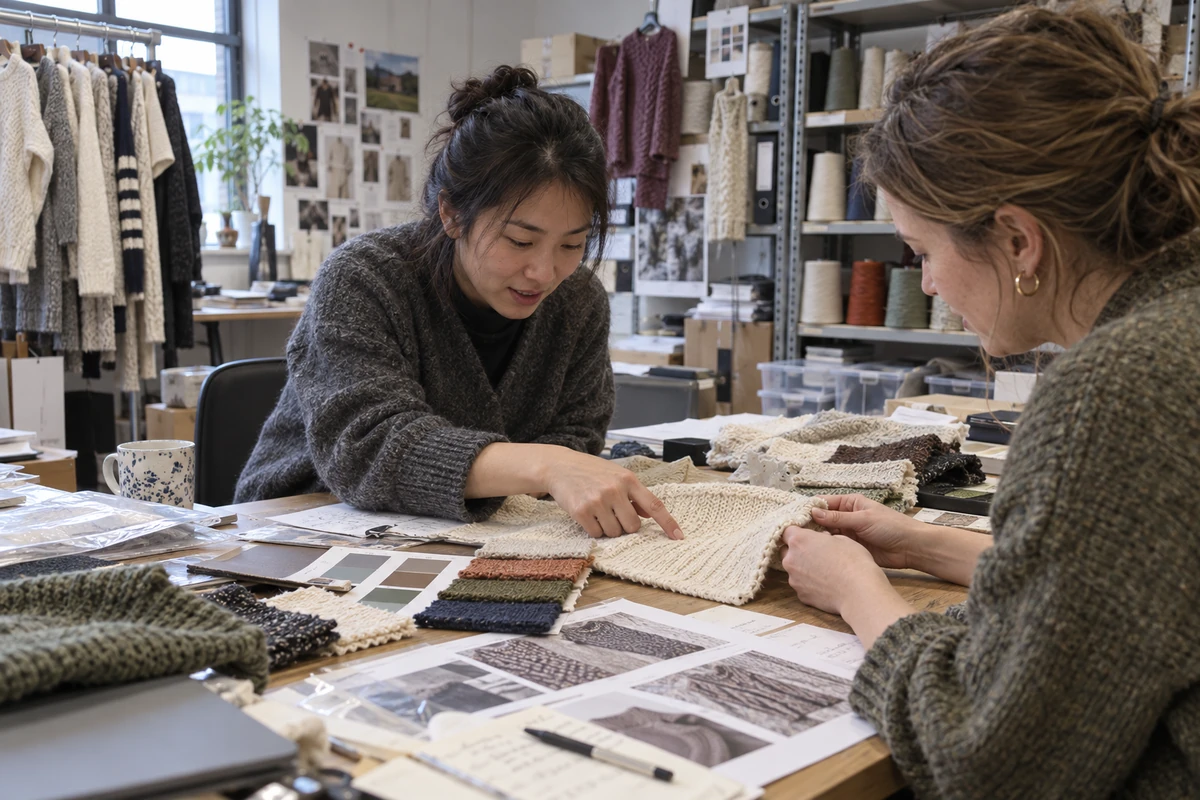
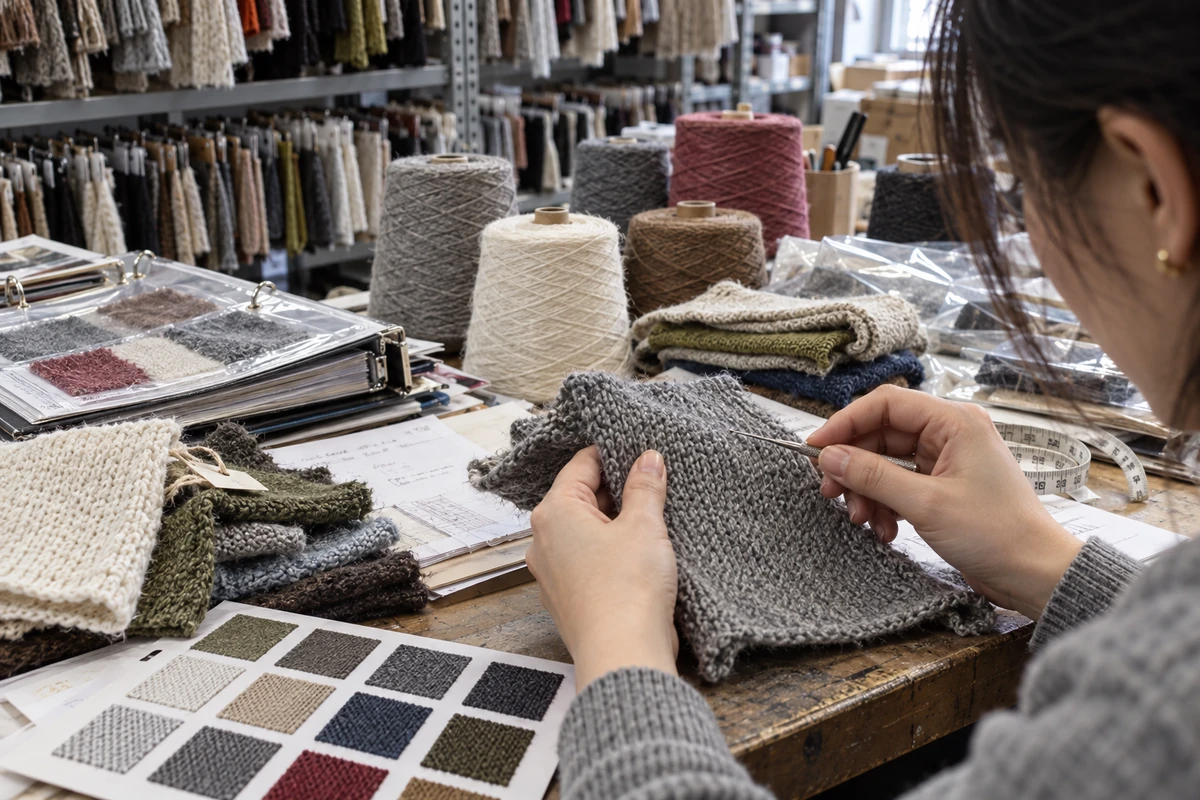
| 02 · Swatch development | About 1 week after yarn selection | Yarn, gauge, stitch, colour and handfeel, confirmed on physical swatches. |
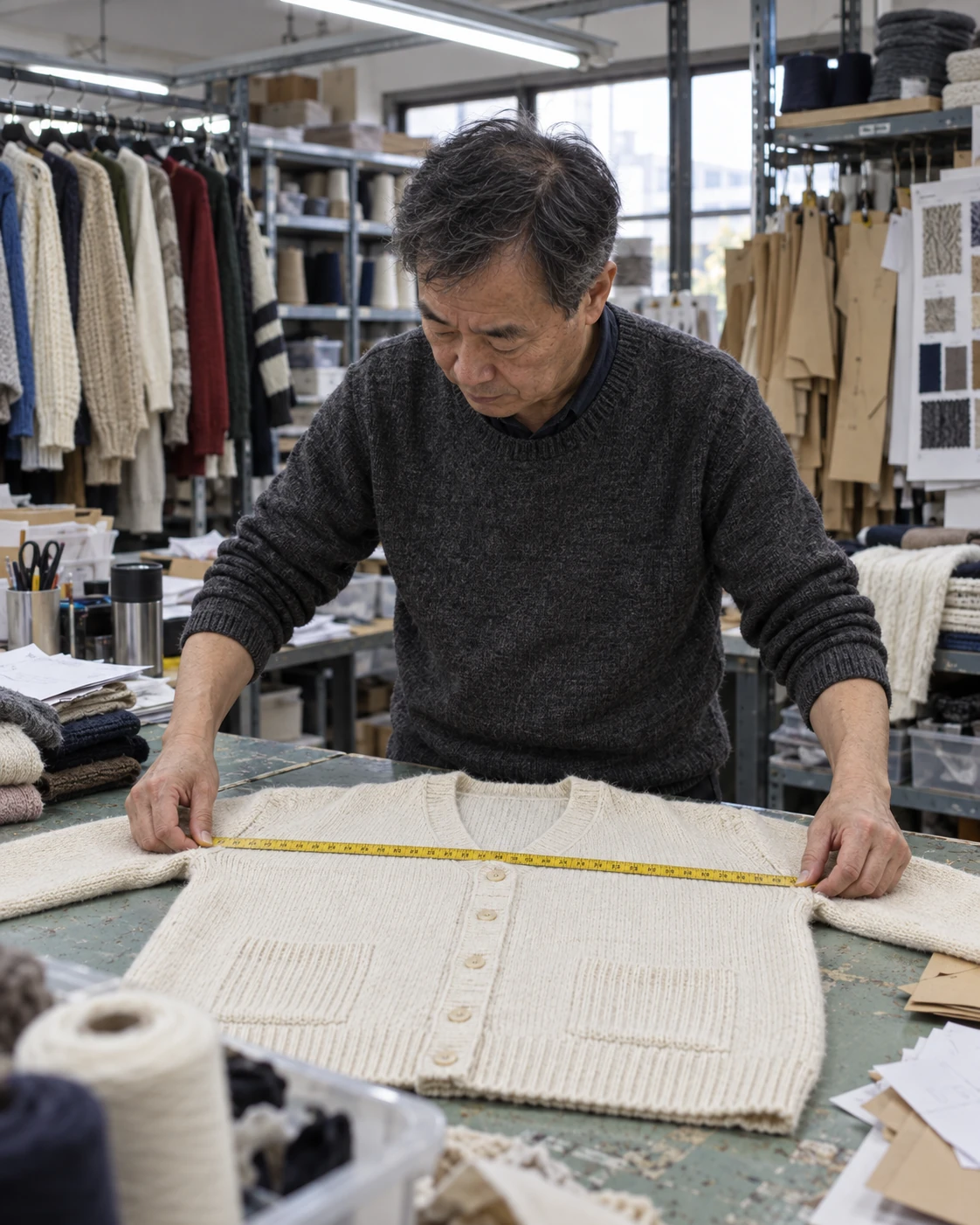
| 03 · Full sample & fit | About 1–2 weeks per sample round | Fit, measurements, proportion and make-up details; each revision round adds several days. |
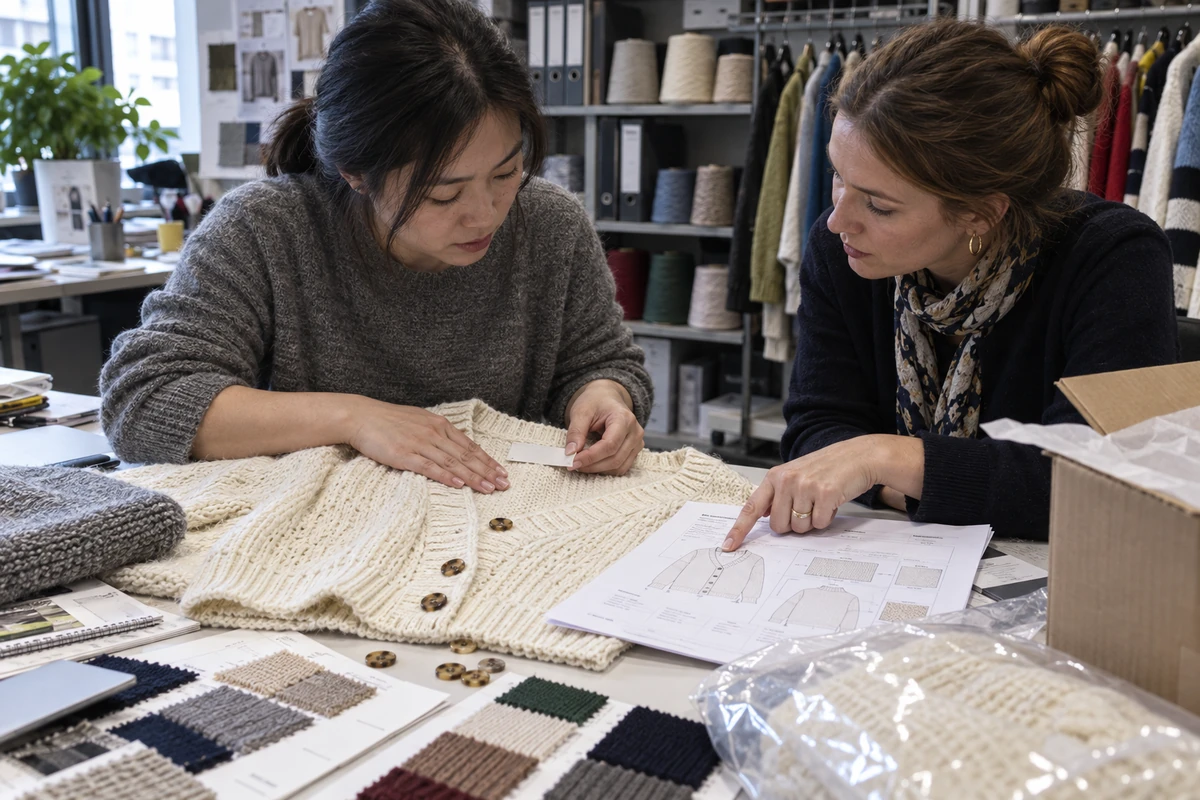
| 04 · Production approval | Decision checkpoint | Approved sample or PPS, production specification, labels, packing — the bulk standard. |
| 05 · Bulk & shipment | Commonly 4–6 weeks after approval | Material preparation, knitting and linking, in-process QC, final inspection, packing and documents. |
Ranges are typical, not guaranteed. Peak season for fall/winter programmes (roughly July–September) and complex structures such as heavy cables or intarsia can extend them. Your written schedule from the project review is the reference that counts.
Common questions
Process FAQ
What do I need to start?
A reference image, a sketch, a physical sample or a full tech pack — any of these is enough to open a project review. What matters at the start is the product direction, an approximate quantity and your timing, not complete documentation.
Can I start without a tech pack?
Yes. Most projects here start from a reference image or a sample. We draft the first measurement specification from your reference and confirm it with you before a full garment is made, so the sample is reviewed against a written standard rather than a conversation.
How long does the whole development take?
For a typical style: about one week for swatches after yarn selection, one to two weeks for the first full sample, plus one revision round, then bulk production commonly four to six weeks after production approval. Complex structures and peak season extend these ranges.
What is the minimum order quantity?
MOQ depends on yarn, gauge, construction and the number of colourways — minimums usually apply per colour rather than per style. Small runs in the 30–100 piece range are workable, but unit prices are higher because set-up cost is spread over fewer garments. The feasibility review will confirm the practical minimum for your style.
Who approves what, and when?
You approve material direction from physical swatches before a full garment is made; fit and measurements from the full sample; and the production standard — approved sample or PPS, specification, labels and packing — before bulk production starts. Each approval is a written record, so instructions never live only in chat messages.
Related guides: developing knitwear without a tech pack · how the development timeline really works · small-run cost at 30–100 pieces