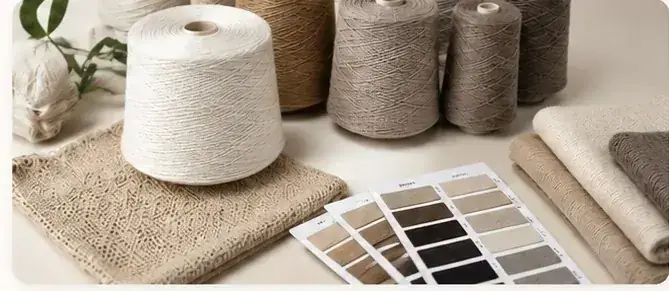
A buyer does not need to choose a machine gauge before contacting a factory. But it helps to understand that a yarn choice is never only about fibre content, and a gauge number is never a quality ranking. Together with stitch structure and density, they determine the character of the finished garment.
The three decisions that work together
YARN
Fibre and specification
Composition, twist, thickness, hairiness and colour route influence touch, appearance, weight, availability and how a garment behaves after finishing.
GAUGE
Knitting scale
Gauge affects the scale of stitches and the range of yarns and structures that can be used. It should follow the product direction, not be selected as a shortcut for “better”.
DENSITY
Fabric balance
Density controls how open or compact the knitted fabric becomes. It affects opacity, recovery, drape, handfeel and the visibility of stitch texture.
FINISHING
Final character
Washing, pressing and other appropriate finishing steps may change softness, dimensions and surface. Judge a proposed route after the intended finish.
Questions buyers should answer before sampling
Is the garment designed for warmth, layering or a light season? Does it need surface texture, a smooth face, a brushed feel or visible openness? How much stretch is acceptable? Is a natural-fibre direction essential, or can blends be considered? Which visual feature must remain closest to the reference? These answers let a development team explain trade-offs instead of guessing.
Ask the factory to identify the assumptions behind its proposal: yarn direction, expected sample finish, construction and any point that may change MOQ, cost or lead time. Then assess the actual sample for handfeel, weight, stretch, opacity and silhouette together. A yarn swatch alone cannot answer whether the garment works.
FAQ
Material and construction questions
Does a finer gauge always make a better sweater?
No. It creates a different construction possibility. The suitable gauge depends on yarn, stitch, density, desired weight and the garment’s purpose.
Can density be changed after the first sample?
Often it can be reviewed, but it may alter measurements, stretch, drape and texture. Recheck the whole garment after an adjustment.
Can a factory suggest an alternative yarn?
It can suggest a direction when a specified yarn is unavailable or unsuitable. The buyer should confirm whether the alternative still achieves the intended handfeel and commercial requirement.