
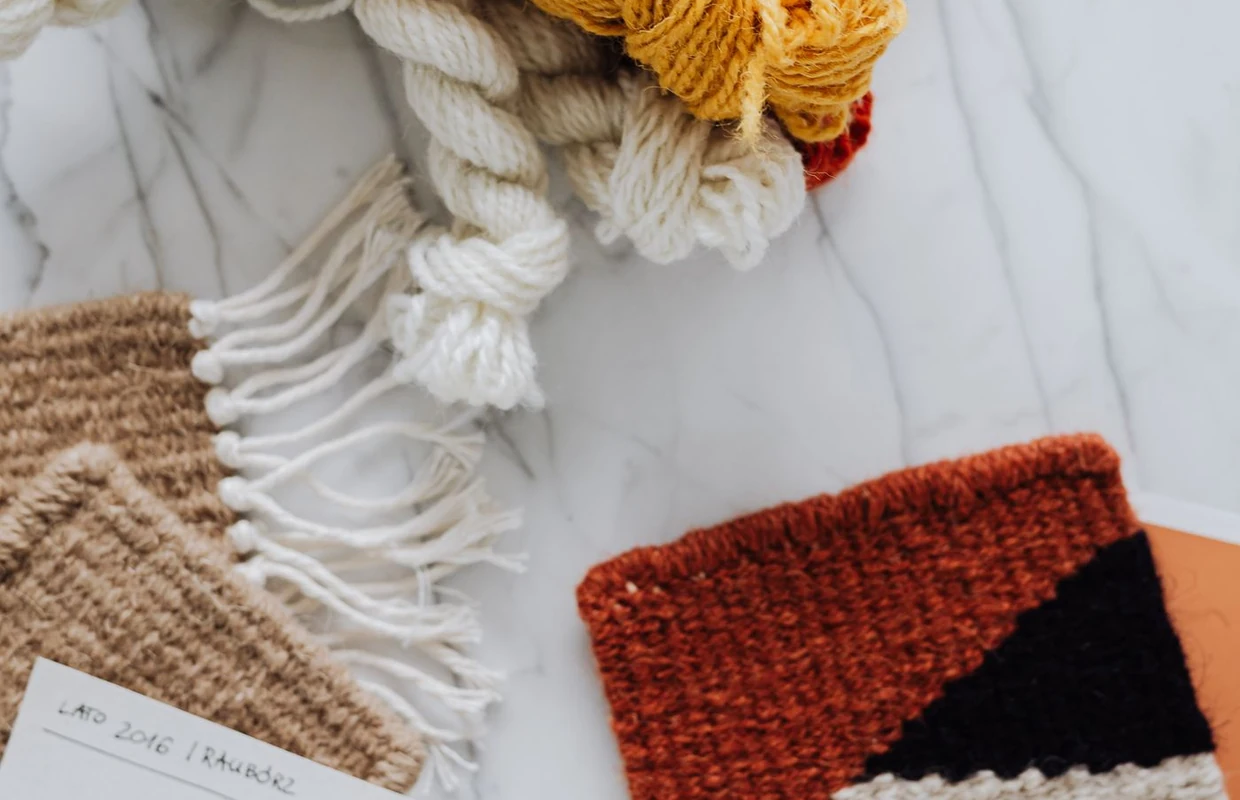
What is a knit development swatch?
It is a small physical knitted panel made to test the construction proposed for your design. Unlike a flat woven fabric cutting, it shows the actual knit loop, surface texture, drape, stretch, thickness and recovery. It is the most useful bridge between a digital inspiration image and a wearable product.
What you can review
Softness, fibre direction, weight, surface character and a viable alternative when the first option is unsuitable.
Texture, density, openness, stretch and whether the construction supports the intended silhouette.
Stock colour direction or a proposed colour-card route before committing to a garment.
Whether the look can be made consistently at a realistic price and quantity.
Five checks when your swatches arrive
1 · Knitted structure and appearance
Look at the loop definition and surface character. Is the stitch as open or as dense as your reference, and does the surface read the same at arm’s length as it does in a close-up photo?
2 · Thickness and weight
Hold the swatch and judge the season it belongs to. A piece that is right for a light layer can be too thin for winter, while a heavier option changes how the garment hangs on the body.
3 · Hand feel
Softness, dryness, hairiness and any scratchiness against skin are exactly what a photo cannot show. Compare it with a garment already in your range instead of judging it in isolation.
4 · Drape and stretch
Pull it in both directions and let it fall over your hand. Note how far it grows and how well it recovers — poor recovery means the fit will move after wearing.
5 · Colour direction
Check colours in daylight, not only under studio lighting. At this stage approve a direction rather than a single dye lot; lab dips and bulk dyeing come later.
Reply with one comment per point. A clear “closer to this” or “too heavy” for each check is what keeps the next round short and avoids a third development loop.
What happens after you approve?
Once you confirm the yarn, colour, knitted structure and hand feel, we can move to garment measurements and full-sample development. That order matters: changing material or density after the garment sample is already made often adds avoidable time and cost.
Who benefits most
This stage is particularly useful for a start-up brand working from a reference image, a designer choosing between natural-fibre options, or a buyer who needs to compare lightness, transparency or texture before approving a product. You do not need a finished tech pack to start; a clear direction is enough to begin the conversation.
What to send us
Send your reference image or sketch, intended season, preferred fibre if you have one, target retail position, likely quantity and any colour direction. We will use that information to suggest a practical swatch route.
FAQ
Swatch-development questions
What does the swatch-development fee include?
Confirm the agreed swatches, colour options, number of revisions and whether courier delivery is included or separately quoted before work starts.
Is USD 50 the price of a full garment sample?
No. USD 50 is the starting point for the swatch-development stage. Developing a complete garment sample is a later stage with its own scope and quotation, based on the approved material direction.
How many yarn or structure options are included?
The number of options and swatches is agreed as part of the project scope. The starting price should not be read as an unlimited selection of yarns, structures or revisions.
Related: the full start-up development route and MOQ planning for colours and sizes.
A customer discussion: approve a yarn direction before assuming an alternative
In a material discussion, a brand sought a softer-looking knit within a defined budget. Alternative yarn directions were proposed, but the customer did not accept the proposed level of substitution and would not increase the budget for that collection. Agree composition, intended effect, swatch scope and price before development; do not treat a proposed material as approved or claim that testing or production occurred.