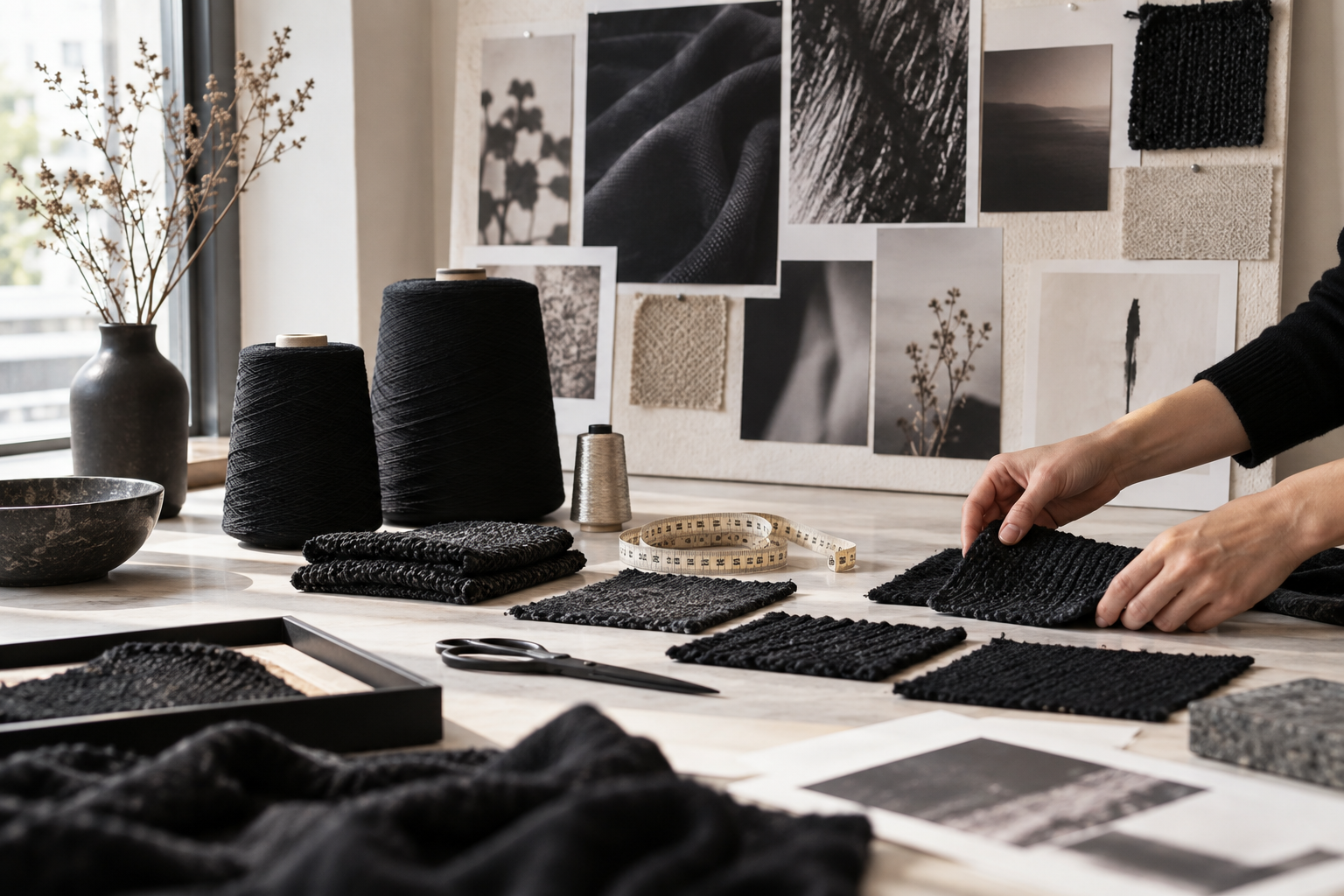
A new direct-to-consumer fashion brand came to us with a clear ambition for its first knitwear product: a premium women’s wrap-cardigan direction with deep black colour, a soft but controlled handfeel and a discreet light-catching effect. The client had concept images and references, but no complete Tech Pack or confirmed yarn route.
Start with the product priorities
The client’s visual direction was elegant and feminine, with a covered wrap front, a belt-defined waist and a relaxed fit. The key requirement was that the front panels should overlap sufficiently after the belt was tied. Some details were refined during the conversation; for example, pockets were removed to create a cleaner silhouette.
This gave the project a useful hierarchy: protect the wrap-front coverage, waist definition, softness and restrained premium appearance; keep material composition, weight and final construction open until physical development could test them.
Why the project began with swatches
The desired effect was deep black in normal light with only a subtle shimmer under light. That cannot be approved reliably from a description or a screen image. Several directions were therefore prepared for comparison, including understated metallic-thread and sequin-yarn possibilities alongside the supporting yarn options.
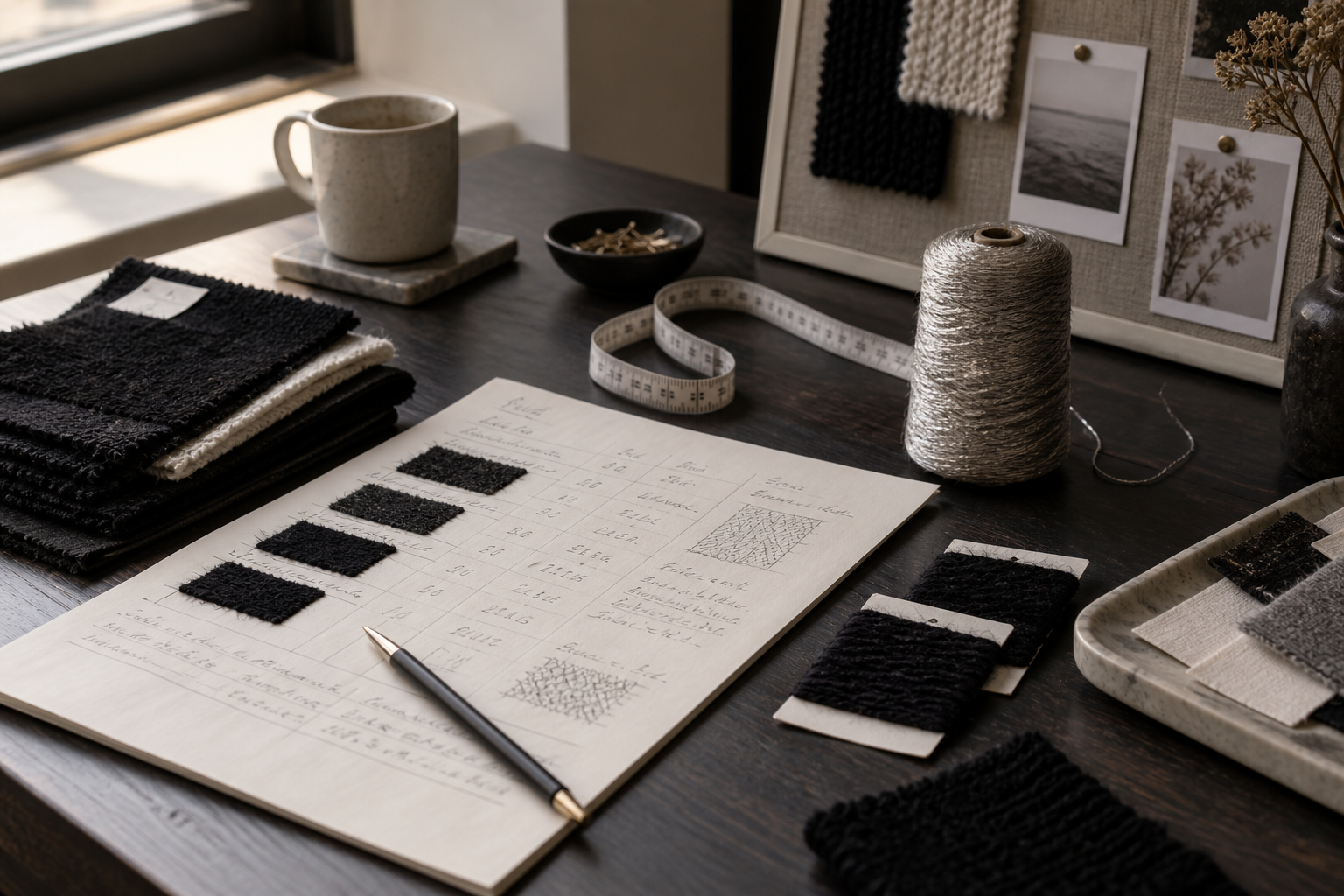
AI visual illustration of a generic swatch-review process; no customer materials, measurements or documents are shown.
Beginning with swatches allowed the client to judge the actual handfeel, colour depth and light response before investing in full pattern and garment development. It also gave both sides a clearer basis for later questions about final weight, construction and production assumptions.
A staged development route
Translate images into priorities
The initial references established the desired visual language and identified the areas that needed development input: material, shimmer, fit and front overlap.
Compare physical directions
The paid swatch stage focused on yarn, black colour, handfeel and controlled shimmer. It created a practical decision point before a full cardigan sample.
Make the product executable
The client then supplied the measurement and fit direction needed to develop the S/M sample, including the intended relaxed body and front coverage.
Confirm the garment as a whole
After swatch approval, the next step is a complete sample to review fit, belt position, front overlap, collar direction, sleeve shape and the final material effect together.
What new brands can take from this case
A formal Tech Pack is valuable, but it is not the only valid start. A clear reference, a realistic product position, a list of non-negotiable design points and a willingness to approve development in stages can create a much stronger first project. Swatches are particularly useful when fibre, handfeel or special surface effects remain undecided.
The project is currently at the paid material-development stage. Its progress shows why a structured path—concept, material, measurements, sample, then production—helps both the buyer and factory make decisions with less guesswork.