CAPABILITY · HOW WE DEVELOP
From Brand Concept to Commercial Product: How We Help European & American Fashion Brands Develop Quality Knitwear
For a growing European or American fashion brand, developing a successful knitwear product is not only about having a beautiful design. The real difficulty is turning an idea into something that can be produced, sold, and true to the brand's positioning.
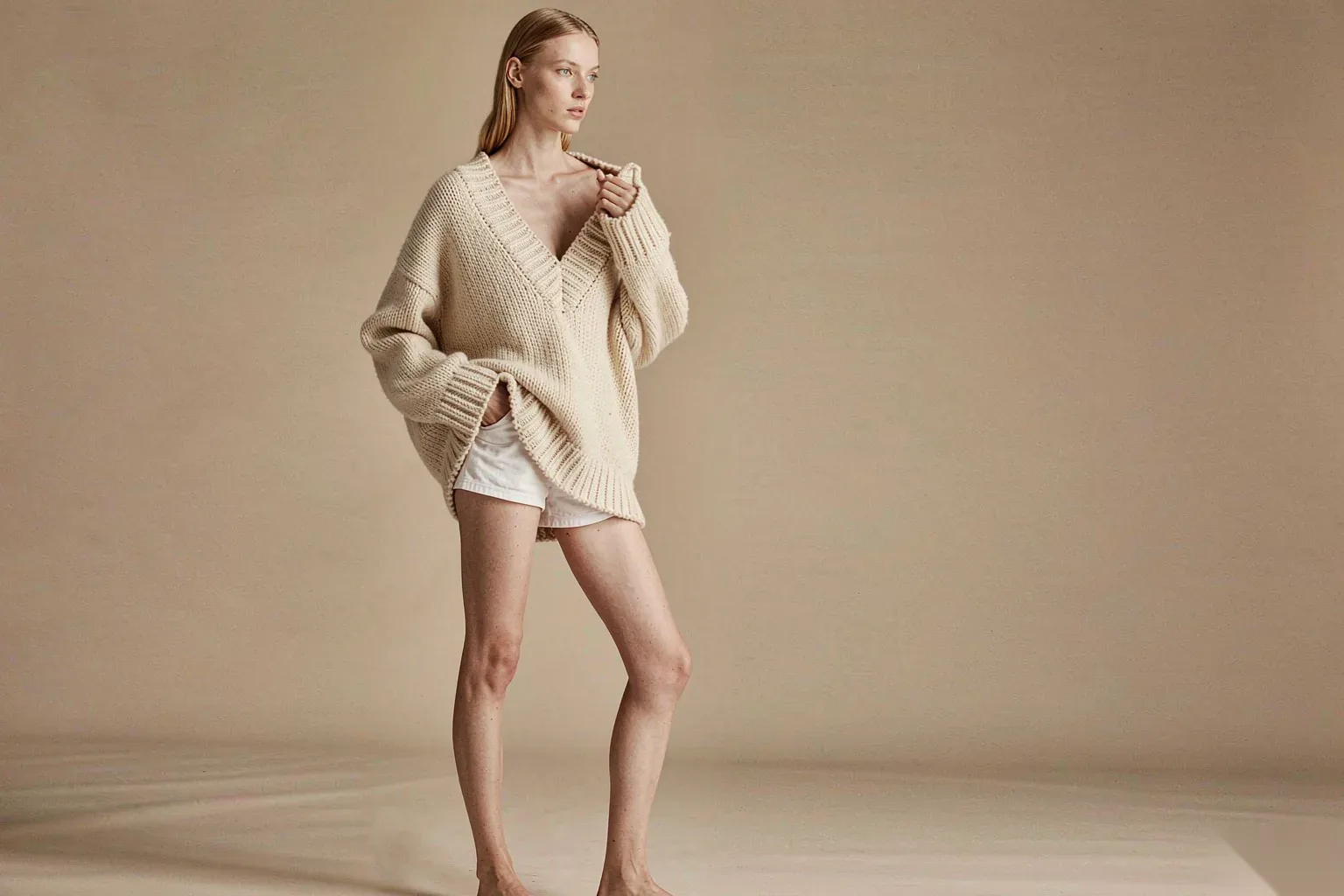
Many brands already have a unique design philosophy, a clear brand style, reference images they love, and a strong imagination of how the product should feel. But between the idea and the finished garment, a number of practical questions still have to be answered: which yarn? which knitting technique? how is the design effect achieved? how is cost controlled? how do you test the market with a small batch?
As a knitwear manufacturer based in Dongguan, China, we have long helped European and American fashion brands through the full process — from product development to bulk production — turning brand ideas into knitwear that can actually be sold.
Start with the brand's philosophy, not with production
Every fashion brand has its own positioning. Some pursue premium texture, distinctive design, limited series and a personalised style. Others care more about commercial sell-through, product stability and market acceptance.
So before production begins, we first understand the brand's target market, customer group, product positioning, price range and design philosophy. Because the same sweater, by changing just one yarn or one knitting structure, can end up looking completely different.
Choosing the right yarn is the first step to quality knitwear
The core of knitwear is not only the style. Yarn decides the wearing experience, the handfeel, the weight, the visual effect and the perceived value of the product. Material selection is therefore one of the most important parts of development.
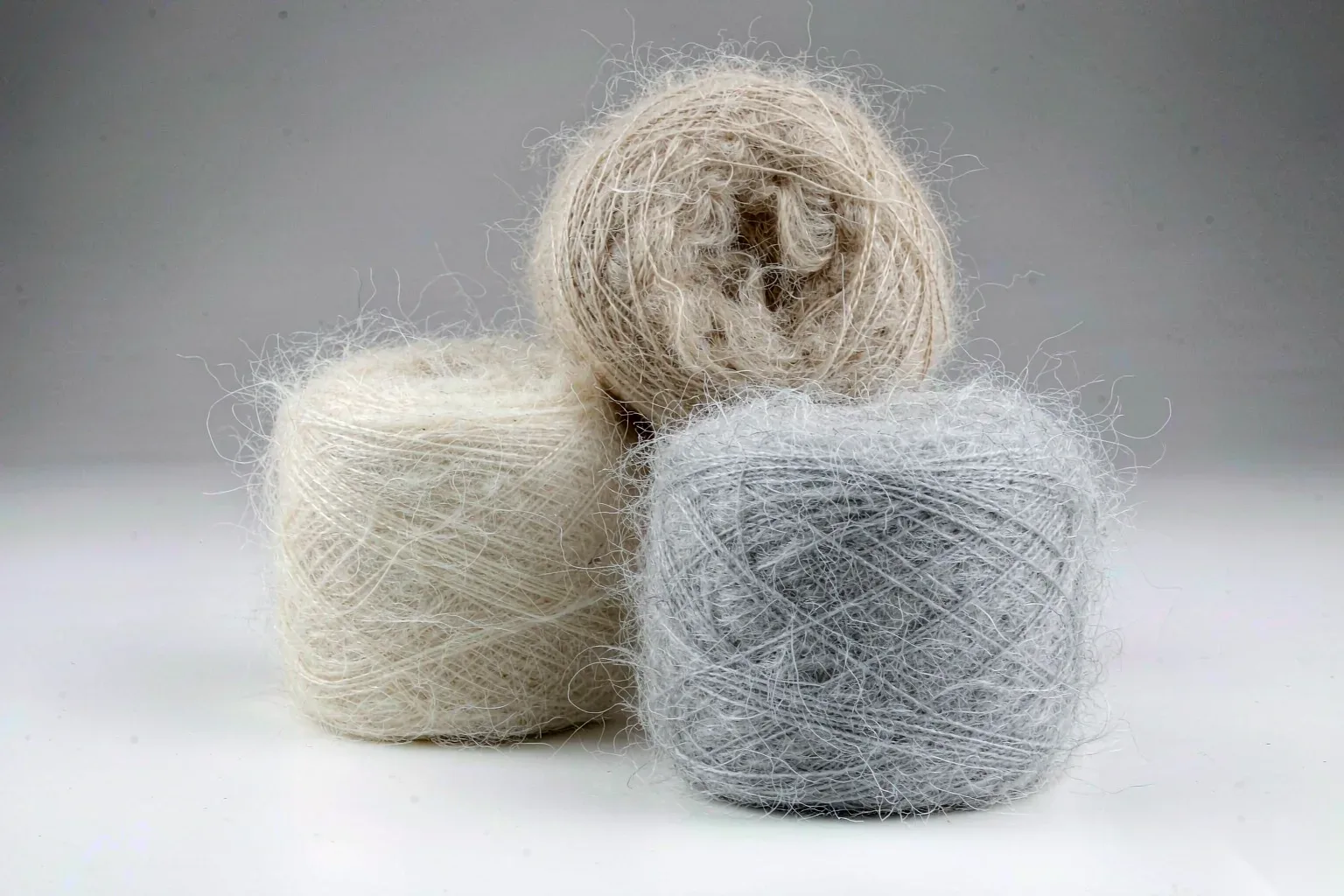
Yarn selection drives handfeel, weight and the final look of the garment.
Merino Wool
Merino wool has long been widely used in quality knitwear. It offers a soft, comfortable handfeel, good warmth and a natural fibre texture. It suits premium sweaters, cardigans, knit dresses and refined basics.
Mohair
Mohair is a premium yarn loved by many designer brands. It brings a fluffy, soft visual effect, a distinctive hairiness and stronger fashion expression. It suits designer sweaters, statement cardigans and autumn–winter premium collections.
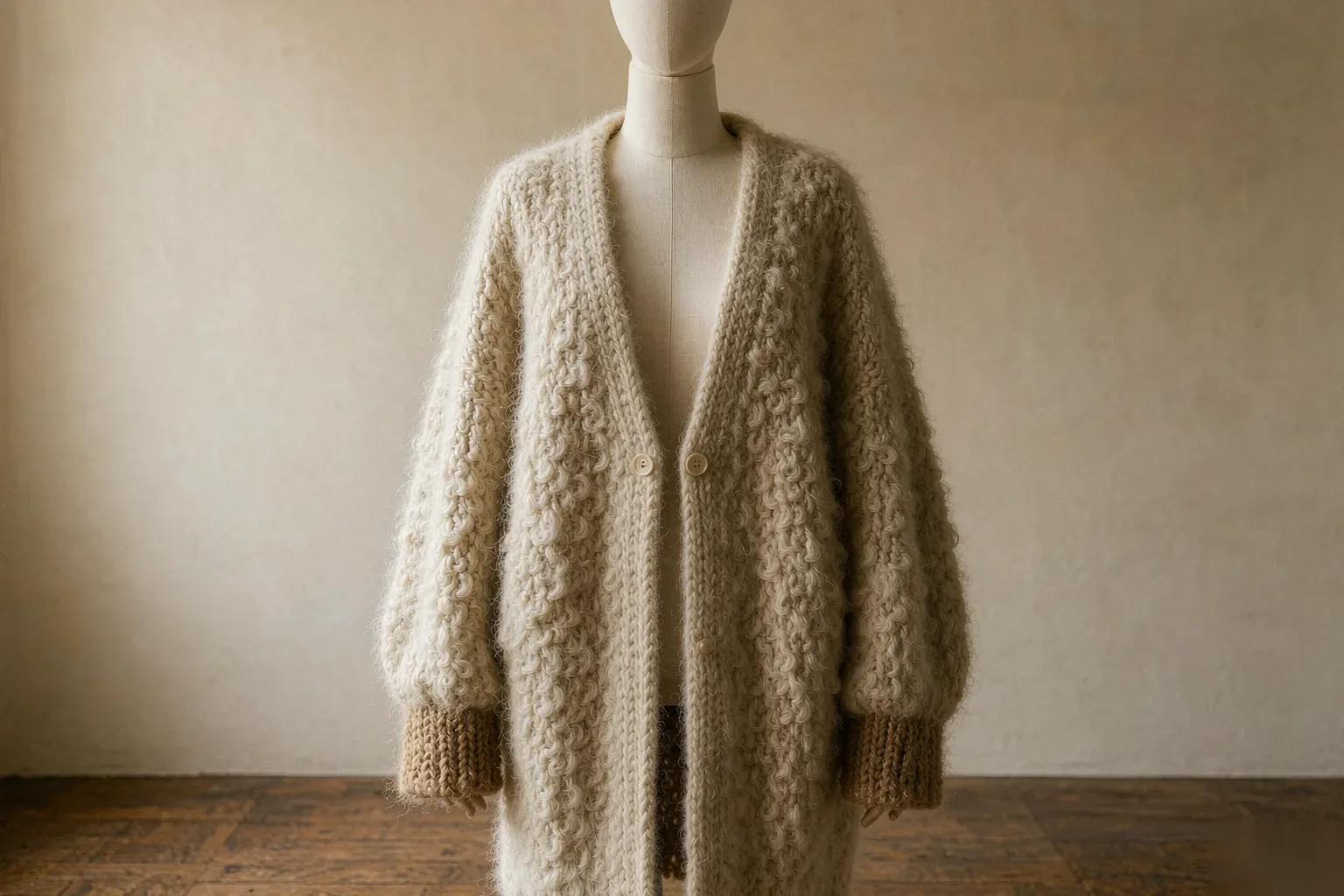
A mohair open cardigan — fluffy texture, strong fashion expression.
Alpaca blends, wool blends and specialty yarns
Beyond traditional natural fibres, we also help brands develop alpaca blends, wool blends, bouclé, brushed yarn, fancy yarn and metallic yarn. Different material combinations let a brand create a more distinctive product style.
From images and ideas to a product that can actually be produced
When many European and American brands first reach out to us, they usually already have product photos, tech sketches, a sample garment or brand inspiration. But between the image and actual production there is one important process: product development landing. Our development flow includes the following.
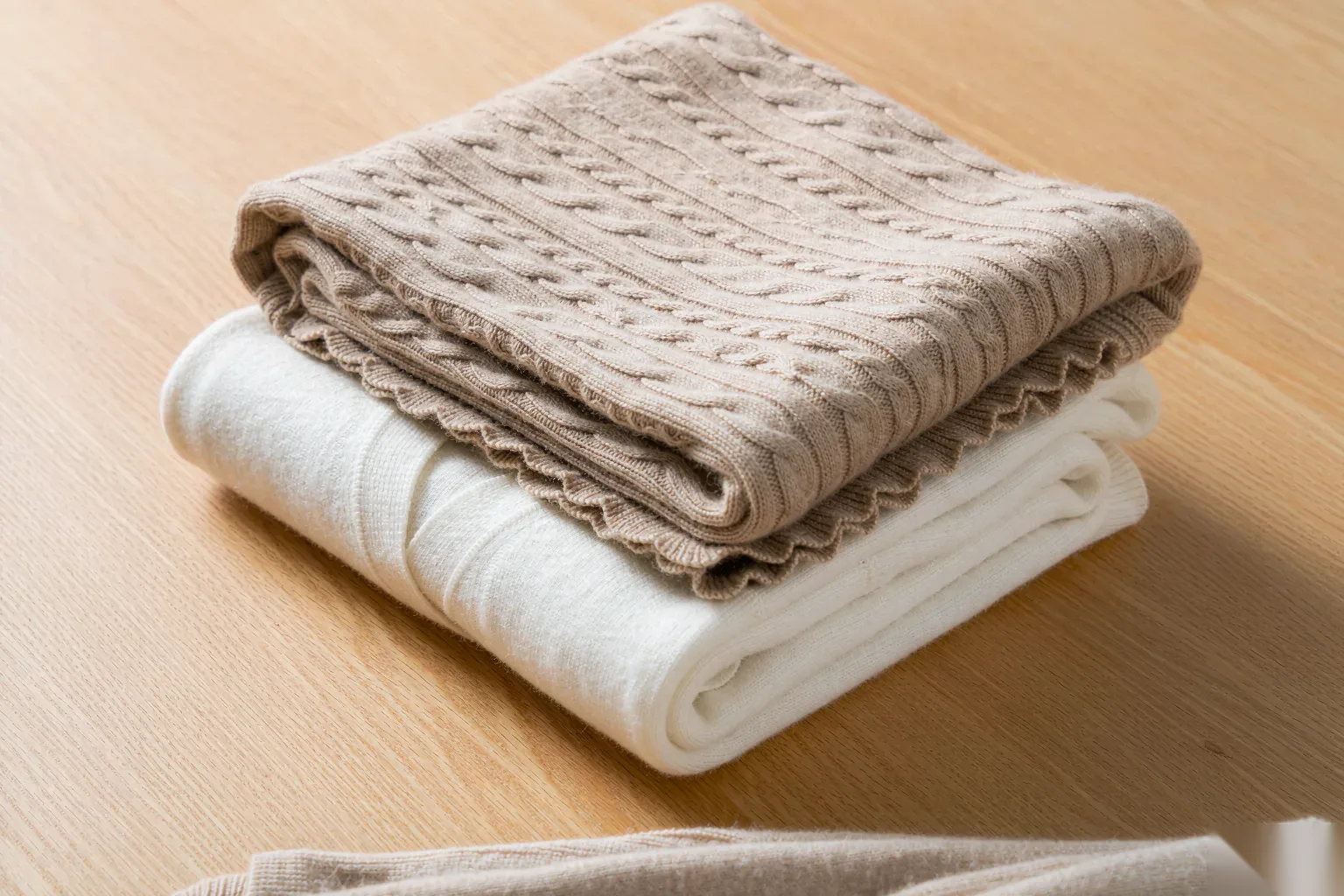
From a reference image to a produced, folded, ready-to-ship garment.
Step 1 — Material and technique confirmation
Based on the brand's needs, we provide yarn selection, colour cards and knitting swatches, so the client can confirm the colour effect, yarn handfeel, thickness and texture in advance.
Step 2 — Sample development
Once the material is confirmed, we begin making the sample garment. Through development we keep adjusting the fit, size, knitting density, weight and detail craft, bringing the final product closer to the brand's original design idea.
Supporting growing brands with small-batch production
Many emerging fashion brands do not want to produce large inventory at the early market stage. They need to test market feedback, launch limited series and lower inventory pressure. Flexible production capacity therefore matters.
Single size — 50 pieces per colour
Multiple sizes — 25 pieces per colour, per size
This lets brands expand their product line while controlling risk.
More than a factory — a knitwear development partner
For many brands, finding a factory is not difficult. The real difficulty is finding a partner that understands brand needs and helps solve product-development problems. A professional knitwear supply chain needs:
- Yarn resource integration capability
- Product development capability
- Knitting technique experience
- Sample adjustment capability
- Bulk production management
- Quality control capability
In Dongguan, China, through rich knitwear industry resources, we help fashion brands worldwide complete the transition from idea to product.
Closing
A great knitwear product needs a design philosophy, the right materials, professional craft and a stable supply chain. For European and American brands looking for a Chinese knitwear supplier, a reliable development partner helps turn ideas into real products in the market — faster and more steadily.
Start with the idea you already have
Reference images, a material direction, a quantity or a launch plan are all valid starting points.
Send your project brief →FREQUENTLY ASKED
Can I start knitwear development without a complete tech pack?
Yes. Many brands start with reference images, a sample garment or a mood board. Through material and technique confirmation, we turn pictures and ideas into a producible sample step by step.
What is the minimum order for small-batch knitwear?
Single size: 50 pieces per colour. Multiple sizes: 25 pieces per colour, per size. This suits market testing and limited runs without large inventory.
What matters most when choosing yarn?
Wearing experience, handfeel, weight, visual effect and perceived value. Merino, mohair, alpaca blends and various fancy yarns suit different brand positioning.