When enquiring with DALANG SMART KNITTING, plan custom production of at least 60 pieces per style in total. Colour allocation is reviewed separately. Different styles cannot be combined to meet this floor; yarn, construction or size requirements may require a higher quantity.
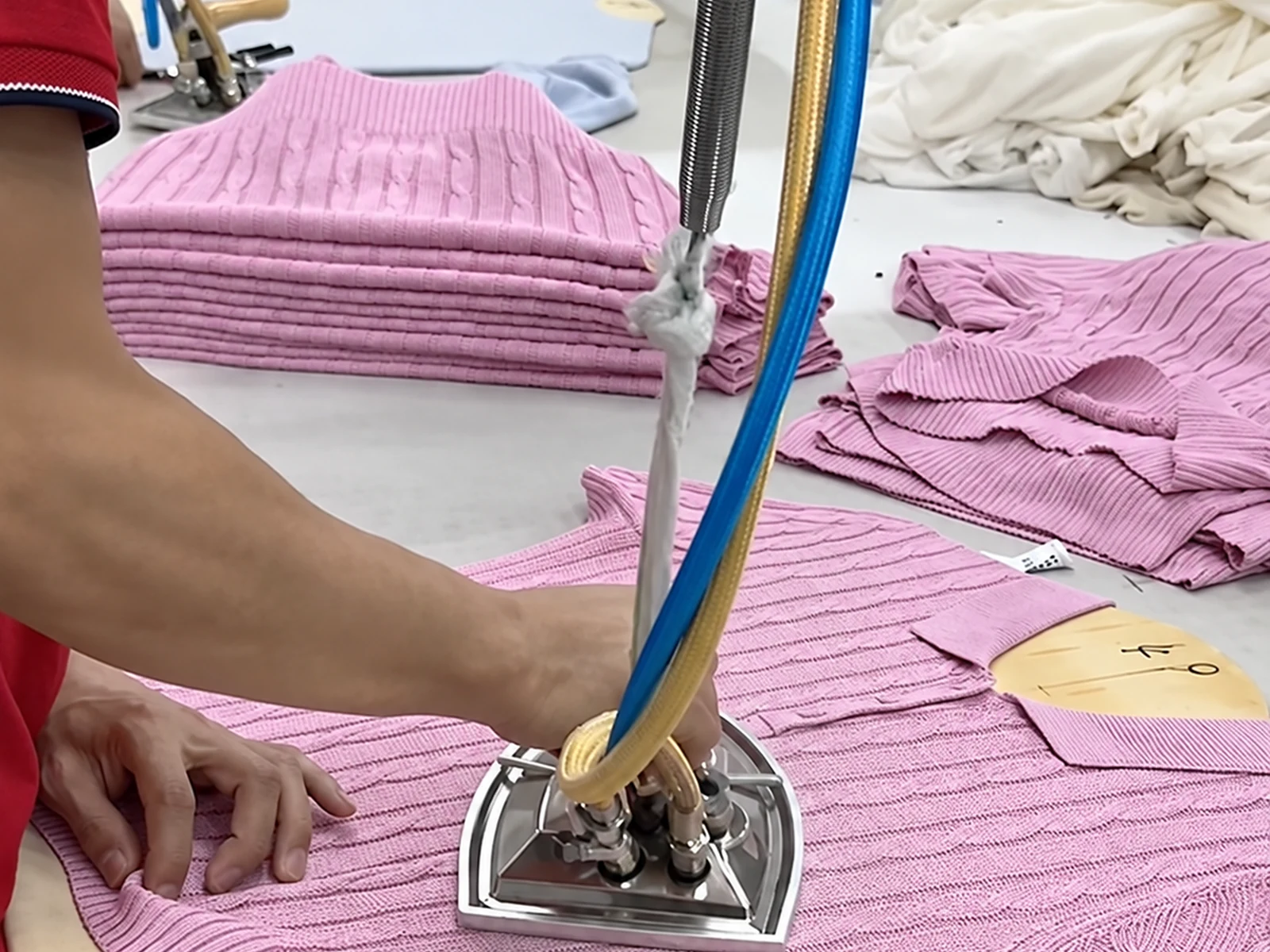
Photo: Steam finishing of knitted panels, from the DALANG SMART KNITTING factory photo archive. The process photograph is illustrative and is not presented as a customer reorder case.
A sweater has sold well and you want another run. Sending the old purchase order is a useful starting point, but it does not answer every question about the next batch.
The practical aim of a reorder is to preserve what customers liked while recording any deliberate changes. Before confirming the new production run, agree the reference garment, materials, fit, finish, quantities, timing and acceptance process in writing.
The seven checks below form a suggested reorder workflow for fashion brands. Apply them to the actual construction and sales requirements of your garment.
1. Identify the exact garment you want repeated
Start with the version that reached customers. An early development sample may differ from the final production garment, so “repeat the sample” can be ambiguous.
Choose a retained garment from the accepted first run where possible. Record its style code, version, size, colour and original order reference. Use this alongside the final measurement specification, approved construction notes and any agreed corrections.
If you want a change, give it a separate revision reference. A shorter body, stronger cuff or different button should appear as an intentional instruction, rather than a comment mixed into an otherwise unchanged order.
Confirmation to keep: A named reference garment and one current specification, with a clear list of changes.
2. Reconfirm the yarn and colour approval
Ask whether the original yarn article and colour remain available. Record the supplier's material reference, fibre blend, yarn count, colour code and proposed lot information. If a substitute is proposed, review it before authorising its use.
A matching colour name does not establish an identical shade. Yarn producer Lion Brand explains that yarn from different dye lots can vary in colour and may appear different under different lighting. That supports checking a physical colour reference for the new run instead of relying only on a screen image. Read Lion Brand's explanation of dye lots.
Confirmation to keep: The agreed yarn reference and a recorded approval of the new production shade, including any accepted difference from the original.
3. Decide whether the fit is repeating or changing
Use sales and return information carefully. “Customers want a looser fit” needs to become a measurement decision before it becomes a production instruction.
Review the size chart against the retained garment. Confirm how each key point is measured, which tolerances apply and how measurements are taken after the agreed finishing process. If you change the fit, check the effect across the size range rather than adjusting only the sample size.
For example, adding body width may also require a review of the armhole, shoulder and sleeve relationship. Treat this as a development question to resolve with the supplier, rather than assuming every other measurement can remain untouched.
Confirmation to keep: An approved size specification and, where needed, a revised fit or size-set review.
4. Record the construction, finish and performance checks
Keep the stitch structure, garment weight target, ribs, seams and trims alongside the material record. Agree which finishing steps define the reference handfeel and appearance, and how the new batch will be compared with it.
Where performance matters to the product promise, specify the relevant assessment before production. Woolmark's quality programme, for example, addresses fibre content, durability, colourfastness and laundry performance. Its specifications and test methods are tied to particular product requirements; they are not a universal acceptance rule for every sweater. See Woolmark's quality overview and product specifications.
Agree appropriate methods and acceptance criteria with the supplier or testing provider. A previous report should be checked for relevance to the new material and construction. Mentioning Woolmark here does not imply that the garment or supplier holds its certification.
Confirmation to keep: The construction and finishing record, plus any agreed assessment method, criteria and responsibility.
5. Rebuild the quantity plan by colour and size
Use what you learned from the first run to plan the next one. The bestseller may be one colour and two sizes, rather than every variant of the original style.
Set out units for each colour-size combination and ask the supplier to confirm whether that split is workable. If you add a colour, establish its material and approval requirements separately. A repeat style does not automatically mean every new variant can follow the old order conditions.
For an illustrative planning exercise, a brand might repeat two proven colours and test a third in a smaller allocation. That is a decision to check against demand and supplier constraints, not a recommended universal ratio. Our guide to how colour and size affect knitwear MOQ explains the underlying quantity questions.
Confirmation to keep: A complete colour-size quantity table and written agreement on any exceptions.
6. Obtain a fresh quotation and an approval-based timeline
Ask the supplier to confirm the reorder price on the actual specification and quantity split. Identify separate charges, delivery scope and quotation validity. Do not assume the earlier price still covers a changed yarn, additional colour or revised trim.
Build the schedule around the approvals that remain open. Identify who approves the shade, any revised sample and the final production reference. Agree what happens to the proposed shipment date if those approvals arrive later than planned.
Keep “ready for shipment” separate from your required arrival date when discussing the schedule. For a broader planning framework, see development and bulk production timing.
Confirmation to keep: A current quotation, defined delivery scope and a schedule showing outstanding approvals.
7. Check labels, packing and the batch release process
Review the current label artwork, size labels, hangtags, barcodes and packing instructions. A reorder may use a different destination, fulfilment partner or retail presentation, so confirm the correct version for this run.
Agree the final inspection process, who reviews the results and how discrepancies will be resolved before shipment. Keep a record linking the delivered batch to its approved references and inspection documents. This gives you a basis for assessing the next reorder as well.
Confirmation to keep: Approved packing and artwork files, plus a documented inspection and release route.
Put the seven decisions into one reorder record
| Decision | Record to attach |
|---|---|
| Product version | Retained garment reference and change list |
| Yarn and shade | Material reference and new shade approval |
| Fit | Current measurements, tolerances and any revised fit approval |
| Construction and performance | Finish specification and agreed assessment requirements |
| Order split | Quantity by colour and size |
| Commercial terms and timing | Current quotation and approval schedule |
| Delivery readiness | Artwork, packing instructions and inspection plan |
Before authorising bulk production, resolve any field marked “to confirm.” If a change is still being tested, describe the order as pending that approval rather than as an unchanged repeat.
Planning your next knitwear run?
Share your retained garment reference, proposed quantity split and intended changes with DALANG SMART KNITTING. We can discuss which material, sampling and production decisions need attention before the next run is confirmed.